1: When The Brand Goes Quiet
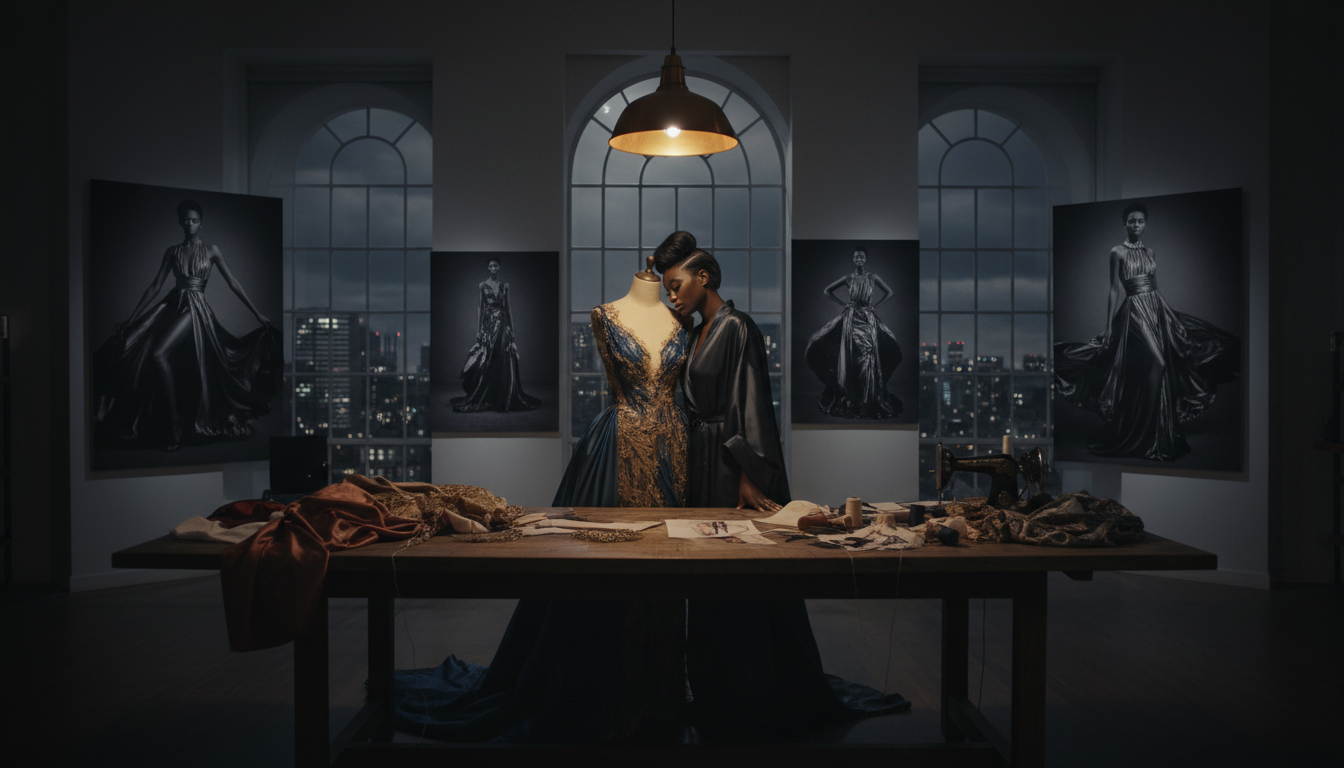
The Creative Collapse Series - Episode One
Moments of genuine difficulty in entrepreneurship rarely make headlines. Public attention concentrates on the visible milestones: the launch, the viral moment, the collaboration that signals arrival. These events sustain a widely circulated story about what building a creative brand looks like, one of momentum, forward motion, and recognition compounding into success. The story is not entirely false. It is radically incomplete.
Beneath the milestones that audiences celebrate lies a long period of experimentation, operational pressure, and financial uncertainty that most founders navigate largely alone and largely without acknowledgment from the same platforms that amplified their breakthrough. The most consequential moments in the life of a creative business often occur away from public attention, when the founder is confronting questions about sustainability that have no clean answers and no audience to perform confidence for.
Anifa Mvuemba, founder of Hanifa, offered a rare window into this reality when she publicly acknowledged uncertainty about what the future might hold for the brand she had spent more than fourteen years building. In an industry that celebrates upward momentum as the only acceptable trajectory, that statement carries weight that is easy to underestimate. Fourteen years of sustained entrepreneurial effort is not a short run. In fashion, where many independent labels disappear within their first few years, reaching a fourteenth year already represents an unusual combination of creative conviction and operational persistence.
Public perception tends to reduce that fourteen-year journey to a handful of visible moments, most prominently the 2020 virtual fashion show in which Hanifa presented its Pink Label Congo collection through digital 3D models, becoming the first Black-owned brand to host a live 3D fashion show on Instagram. The presentation was genuinely innovative. It generated global press coverage, reached millions of viewers, and repositioned Hanifa in the global fashion conversation in ways that years of incremental work had not. It was also built on a foundation of years of incremental work that the moment itself made invisible, and it created expectations that the infrastructure behind the moment was not necessarily equipped to meet at scale.
Long before the global recognition, the brand was built through direct, unglamorous effort. Mvuemba founded Hanifa in 2012 while working other jobs to fund the early stages of the business. Like most independent fashion founders, she operated without venture capital backing, without a corporate parent, and without the operational infrastructure that established houses have built over decades. In the early years she was reportedly fulfilling orders herself, managing production directly while simultaneously developing the creative identity of the brand. This is not unusual. It is the standard condition of independent fashion entrepreneurship, and understanding it is the prerequisite for understanding what makes the structural pressures that followed the 2020 breakthrough so significant.
The fashion industry has a specific way of celebrating creative innovation that makes the operational reality of producing that innovation invisible. When Hanifa's virtual show went viral, the coverage focused almost entirely on the creative achievement, the technology, the aesthetic, and what it represented for Black designers in fashion. Almost none of it examined the operational and financial conditions under which the brand would need to operate in the period following the attention. The attention itself created demand. Demand required production capacity. Production capacity required capital. Capital was not something the coverage addressed, because coverage of creative breakthroughs in fashion almost never addresses capital. It addresses vision.
This is the gap that the Hanifa story makes visible, and it is a gap that runs through the entire structure of how the fashion industry relates to the independent designers whose creative work gives the industry much of its cultural energy.
When difficulties at Hanifa began to surface publicly, the conversation online concentrated on production delays and order fulfilment issues in ways that framed operational complexity as personal failure. This framing is both unjust and structurally revealing. Production delays in independent fashion are not primarily evidence of mismanagement. They are the predictable consequence of a business model in which creative founders are expected to manage manufacturing relationships, supply chain logistics, customer expectations, financial cycles, and public reputation simultaneously, without the institutional infrastructure that larger companies have developed specifically because those functions cannot be managed by one person indefinitely.
Entrepreneur Chika Uwazie later reflected publicly on the situation, articulating a question that many founders carry privately and rarely name in public: whether the cumulative demands of creative entrepreneurship remain worth the personal and emotional cost. That reflection resonated because it named something true. For founders operating without capital buffers, institutional support, or the ability to separate the operational pressures of the business from the personal cost of carrying them, the question is not rhetorical. It is the most honest question available.
What makes this a structural story rather than an individual one is that Mvuemba's experience is not exceptional. It is representative of conditions that many of the most culturally significant independent creative brands are navigating simultaneously. Ceylon, a Black-owned beauty brand founded by Naeemah LaFond, closed in 2024 after years of building a devoted community around products designed for melanin-rich skin. Ami Colé, founded by Diarrha N'Diaye-Kamara with a clear and genuine market need at its centre, announced in 2024 that it was shutting down despite having raised venture capital and built a loyal audience. The Established, a jewellery brand founded by Rashida Jones and Nina Etienne, closed. Koils by Nature, a natural haircare brand with over a decade of community building behind it, shut down.
These are not isolated failures of individual vision or management. They are a pattern, and patterns have structural causes.
The fashion and beauty industries have historically celebrated creative vision while systematically underinvesting in the operational infrastructure that allows creative vision to sustain itself beyond the breakthrough moment. Designers are encouraged to innovate, to generate cultural moments, and to capture public attention. The systems that would allow those moments to compound into durable businesses, reliable manufacturing networks, accessible working capital, operational expertise, and crisis support, are far less developed for independent founders than the cultural celebration of those founders would suggest.
Mvuemba's public acknowledgment of uncertainty should not be read primarily as personal vulnerability. It should be read as an accurate description of structural conditions that the creative economy has produced and has not yet chosen to address. The question it raises is not about one fashion label's future. It is about the architecture of the creative economy itself, about why so many of the brands shaping culture are left to navigate the pressures of that shaping alone, and what would have to change for that to be different.
That question is what this series is built to examine.