The Noise Is Not Neutral
In a conversation about creativity and influence, Rick Rubin once described the importance of protecting the environment in which ideas are formed. Not just the physical space, but the mental and sensory input that surrounds the creative process. His position was simple: what you consume shapes what you create, whether you intend it to or not. That principle has become more critical in the current landscape than it has ever been.
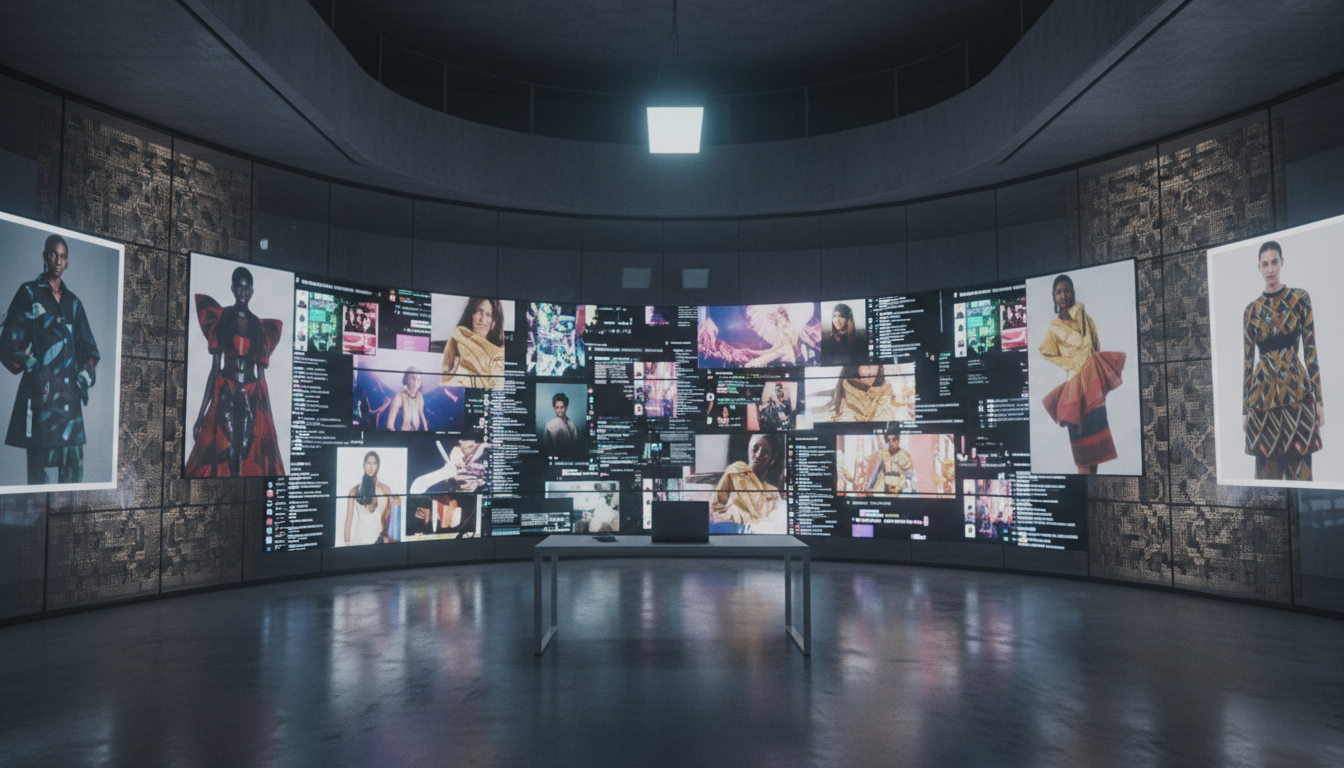
The modern creative environment is saturated. Ideas are no longer developed in isolation. They are formed in constant exposure. Social platforms, trend cycles, commentary, opinions, aesthetics, and metrics all exist in the same space, competing for attention simultaneously. This creates a condition where noise is not just present but continuous, and the problem is not the existence of that noise. It is the assumption that it is harmless.
Noise is not neutral.
What you see repeatedly begins to influence what you consider normal. What you consume consistently begins to shape your creative instincts. Over time it becomes difficult to distinguish between what is original and what has simply been absorbed from the environment around you. This is where subtle misalignment begins, not through obvious distraction but through gradual contamination that is almost impossible to notice while it is happening.
You begin to adjust your ideas to match what performs. You begin to measure your output against what is visible. You begin to second-guess direction because of what others are doing. The shift is small at first, but it compounds. Eventually, your work is no longer fully yours. It is informed, filtered, and shaped by an environment you never intentionally curated.
Scripture speaks to this pattern directly. In Romans 12:2, the instruction is to not be conformed to the patterns of this world but to be transformed through the renewing of the mind. This is not abstract guidance. It is practical. Transformation requires separation, not permanent withdrawal, but intentional distance. Without that distance, conformity becomes inevitable, not through rebellion but through slow absorption.
Creative warfare, in this context, is not loud. It is quiet and consistent. It is the slow shaping of your thinking through repeated exposure. It is the pressure to adapt without realising that adaptation is happening. This is why the altar is necessary. It creates a controlled environment where input is reduced and clarity is restored, where your thinking is no longer reacting to what is constant but returning to what is true, where ideas can form without interference.
Without that space, everything begins to blend. And when everything blends, clarity is the first thing lost.
The goal is not to eliminate influence. It is to become aware of it, because once you recognise that noise is shaping you, you can begin to decide what you allow to remain.
Realignment
Not everything you consume is shaping you in the right direction. Clarity requires intentional input. What you allow consistently will eventually influence what you produce.
Activation
God, help me to recognise the environments that are shaping my thinking without my awareness. Give me the discipline to step back where necessary and the clarity to discern what I should allow to remain.
I declare that I will not be unconsciously influenced. My thinking will be intentional, and my creativity will be shaped from a place of clarity, not constant noise. In Jesus name, Amen.
Realign first. Then execute.
Thomasina