5: The Founder Burnout Crisis
The Creative Collapse Series - Episode Five
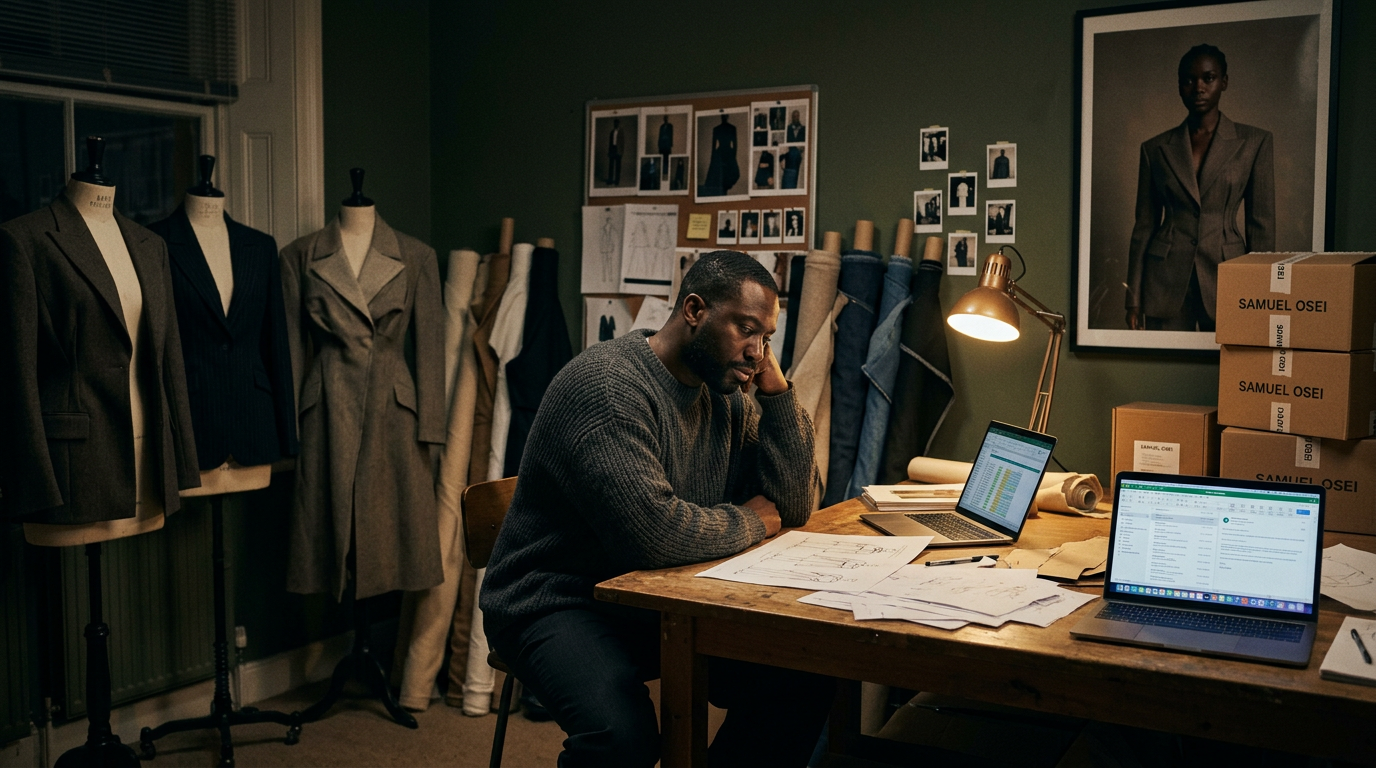
The language that surrounds creative entrepreneurship is almost entirely a language of becoming. Founders are described as visionaries, disruptors, and builders. Their stories are told through the arc of ambition realised: the idea that became a product, the product that became a brand, the brand that became a cultural moment. Perseverance is celebrated. Passion is cited as both the motivation and the sufficient condition for success. The narrative is designed to inspire, and it does inspire, which is part of what makes it so costly. Because the inspiring version of the story systematically excludes the psychological reality of what it actually takes to sustain a creative brand through years of operational complexity, financial fragility, and public scrutiny without adequate institutional support.
Burnout in creative entrepreneurship is not an individual failure of resilience. It is a predictable output of a structural environment that concentrates multiple unsupported roles into a single person and then celebrates that person's capacity to carry them as evidence of exceptional character rather than as evidence of systemic failure. Understanding it as the latter is the prerequisite for addressing it at the level where it actually originates.
What Founders Are Actually Carrying
The public image of the creative founder is built around the visible functions of the role: the creative direction, the brand vision, the aesthetic decisions that shape how the world experiences the brand. These functions are real and they are demanding. They are also the smallest part of what most independent creative founders are actually doing on any given day.
In addition to creative direction and product development, the typical independent fashion or beauty founder is managing production timelines across manufacturing relationships she has built personally, coordinating with logistics providers about shipping delays that she cannot resolve but must communicate to customers, overseeing financial decisions about when to commit to the next production run given cash flow that may not yet justify the commitment, leading marketing efforts across platforms whose algorithms she is expected to understand and respond to, managing customer communications about orders that are delayed for reasons the customer cannot see, and maintaining the public presence that the brand's relevance depends on. All of this happens simultaneously. None of it can be paused while the others are addressed. And the founder is the decision-maker, the implementer, and the public face of every single one of them.
This is the standard condition of independent creative entrepreneurship, not the exceptional condition of a founder who has failed to delegate effectively. The organisational infrastructure required for effective delegation does not exist in most independent creative brands because building that infrastructure requires capital that most independent creative brands do not have. The concentrated responsibility is not a management choice. It is a structural consequence of underfunding, and treating burnout as a personal problem that better time management would resolve is an accurate description of the symptom while being a completely inaccurate diagnosis of the cause.
The Cultural Weight That Gets Added
Aurora James founded Brother Vellies in 2013 with a commitment to artisan manufacturing in Africa and the United States that was both a genuine creative value and a commercially differentiating proposition. The brand built a devoted following and genuine critical respect over several years of careful, incremental work. In June 2020, James launched the Fifteen Percent Pledge, calling on major retailers to commit fifteen percent of their shelf space to Black-owned businesses in proportion to the Black share of the American population. Twenty-nine major retailers eventually signed.
The Pledge was genuinely significant. It was also an enormous expansion of the demands on a founder who was simultaneously running an independent fashion brand through one of the most operationally challenging periods in the industry's recent history. James became responsible not only for the performance of Brother Vellies but for the credibility and momentum of a movement that retailers, press, and the Black entrepreneurial community were all looking to her to sustain. She became, simultaneously, a brand founder, a cultural advocate, an industry reformer, and a public figure whose statements about the Pledge were covered as news. None of these additional responsibilities came with additional operational capacity. They came with additional scrutiny, additional demands on her time and attention, and the specific psychological burden of knowing that the stakes of the Pledge's success extended far beyond her own business.
The pattern is not specific to James or to the Fifteen Percent Pledge. Black creative founders in particular are consistently asked to carry cultural and advocacy responsibilities alongside their business leadership in ways that do not have equivalents for white founders in the same industries. They are expected to represent communities, to advance conversations about equity and representation, and to function as cultural figures whose public positions on issues beyond their brands are monitored and evaluated alongside their business performance. This is an additional form of labour that is structurally unacknowledged and uncompensated, and it compounds the psychological burden of creative entrepreneurship in ways that are specific to the experience of Black founders even within the broader context of independent founder burnout.
When the Funding Arrives and the Pressure Multiplies
Emily Weiss founded Glossier in 2014 as an outgrowth of her beauty blog Into the Gloss, building it into one of the most recognised direct-to-consumer beauty brands of the decade on the basis of a genuine insight about how women wanted to shop for beauty and what they wanted beauty brands to sound like. The brand raised over two hundred and fifty million dollars in venture capital funding and achieved a valuation of approximately 1.8 billion dollars at its peak. In 2022, Weiss stepped down as chief executive officer.
The conventional framing of this transition was as a strategic maturation: a visionary founder handing the operational leadership of a scaled company to a professional CEO. That framing is not wrong. It also obscures the specific pressure that venture-backed founders face that independent founders do not, which is the pressure of operating a company in public with investor expectations, employee responsibilities, and a board whose interests may not always align with the founder's original vision, while also being the person held personally responsible for every dimension of the brand's performance in the press and on social media.
Weiss had spoken candidly before stepping down about the difficulty of maintaining the creative vision that had built the brand alongside the operational and financial demands of running a company at scale with significant investor capital behind it. The tension is structural. Venture capital is designed to accelerate growth, and the acceleration it funds creates organisational complexity that the founder is expected to manage at the same pace. The skills, the tolerance for ambiguity, the capacity for rapid personal decision-making that building a brand from nothing requires are not the same skills that managing a scaled organisation with multiple stakeholders requires. Founders who succeed at the first are not automatically equipped for the second, and the expectation that they should be is itself a structural feature of how venture-backed creative entrepreneurship is typically designed.
When the Company Collapses and the Founder Carries It
Sophia Amoruso founded Nasty Gal as an eBay vintage clothing store in 2006 and built it into a direct-to-consumer fashion brand that generated approximately one hundred million dollars in revenue at its peak. In 2016, Nasty Gal filed for bankruptcy. The collapse followed a period of rapid expansion that the company's operational and financial infrastructure was not designed to sustain, a pattern that this series has examined across multiple episodes in different contexts.
What Amoruso has described publicly about the experience of the collapse is worth examining for what it reveals about the specific psychological structure of founder burnout rather than for the business details of what went wrong. She described the isolation of being the person who is celebrated during growth and blamed during collapse, the experience of watching a company fail publicly when you have built it personally, and the specific quality of the scrutiny that female founders experience during periods of business difficulty that differs in character from the scrutiny applied to male founders in equivalent circumstances. Her memoir and subsequent public speaking about the experience have contributed to a more honest public conversation about the psychological reality of entrepreneurship than the aspirational genre of founder narrative typically allows.
The isolation Amoruso describes is structural rather than incidental. Independent creative founders, and to a lesser extent venture-backed ones, operate without the peer network, the institutional support, and the psychological scaffolding that other high-stress professional roles tend to provide. A lawyer navigating a difficult case has colleagues, partners, and a professional culture that normalises difficulty and provides frameworks for managing it. A doctor managing complex cases has a hospital system, colleagues, supervision structures, and professional protocols designed around the recognition that the work is psychologically demanding. A creative founder navigating a business crisis has the internet, her own resources, and the performance of competence and confidence that brand-building requires even when the brand is in crisis. There is no professional culture of creative entrepreneurship that normalises difficulty in the way that other demanding professions do. There is only the aspirational narrative of the successful founder, which makes the experience of struggling feel like personal failure rather than like the predictable consequence of working in a structurally underresourced environment.
The Intersection With Caregiving
Rebecca Minkoff has spoken publicly about the specific challenge of navigating motherhood while leading an international fashion company, and her account surfaces a dimension of founder burnout that the general narrative of entrepreneurial difficulty tends to treat as a personal circumstance rather than as a structural issue. The expectation that a creative founder will be available for the full range of demands that building a brand generates, including the unpredictable and unscheduled ones that no amount of planning fully contains, is an expectation built around a model of professional life that assumes no competing primary responsibilities.
That model does not describe the reality of most women building creative businesses. The structural underinvestment in the domestic support infrastructure that would allow caregiving responsibilities to be managed alongside professional ones, the cultural expectation that the primary caregiver in most families is the woman, and the specific demands of creative entrepreneurship, including the public visibility, the irregular hours, and the emotional labour of managing a brand and a customer community, combine to produce a form of pressure that is different in character from the pressure that male founders in equivalent businesses typically experience. It is not more important than other forms of founder pressure. It is often invisible in the way that gendered labour tends to be invisible, and its invisibility is part of what makes it so difficult to address structurally.
What Would Have to Change
Peer support structures for independent creative founders exist in limited and often informal forms. Organisations such as the Council of Fashion Designers of America and equivalent bodies in other markets provide some access to community and resources, but they are not designed around the specific psychological support needs of founders under sustained operational and financial pressure. The kind of structured peer learning and mutual support that other demanding professional environments have developed as standard features of professional life has not been systematically built into creative entrepreneurship ecosystems.
Mental health resources specific to entrepreneurial experience have become more visible as conversation about founder wellbeing has grown, but they remain underdeveloped relative to the need and are typically accessed individually rather than being built into the support structures of the ecosystem. The venture capital and development assistance organisations that fund creative businesses do not typically include psychological support as a component of the support they provide alongside capital, despite growing evidence that founder mental health is a material determinant of business outcomes.
What would have to change is the underlying conception of what supporting a creative founder actually means. If the creative economy genuinely values the output that creative founders produce, and the economic and cultural evidence suggests that it does, then it has an interest in building the institutional infrastructure that allows those founders to sustain themselves through the years of work that building something durable requires. That infrastructure includes capital and operational support, which this series has examined in earlier episodes. It also includes the kind of peer community, psychological support, and structural acknowledgment of the human cost of creative entrepreneurship that the current ecosystem has not prioritised because the aspirational narrative of the visionary founder makes it easier to celebrate the output than to examine the conditions under which it is produced.
The next episode turns outward from the individual founder to the broader ecosystem of institutional support, asking what the creative economy would need to build in order for the structural pressures that this series has documented to be addressed at the level where they originate rather than managed at the level of individual endurance.
The Creative Collapse Series is an ongoing investigation into the structural pressures shaping the modern creative economy.