8: The Beauty Brand Pattern
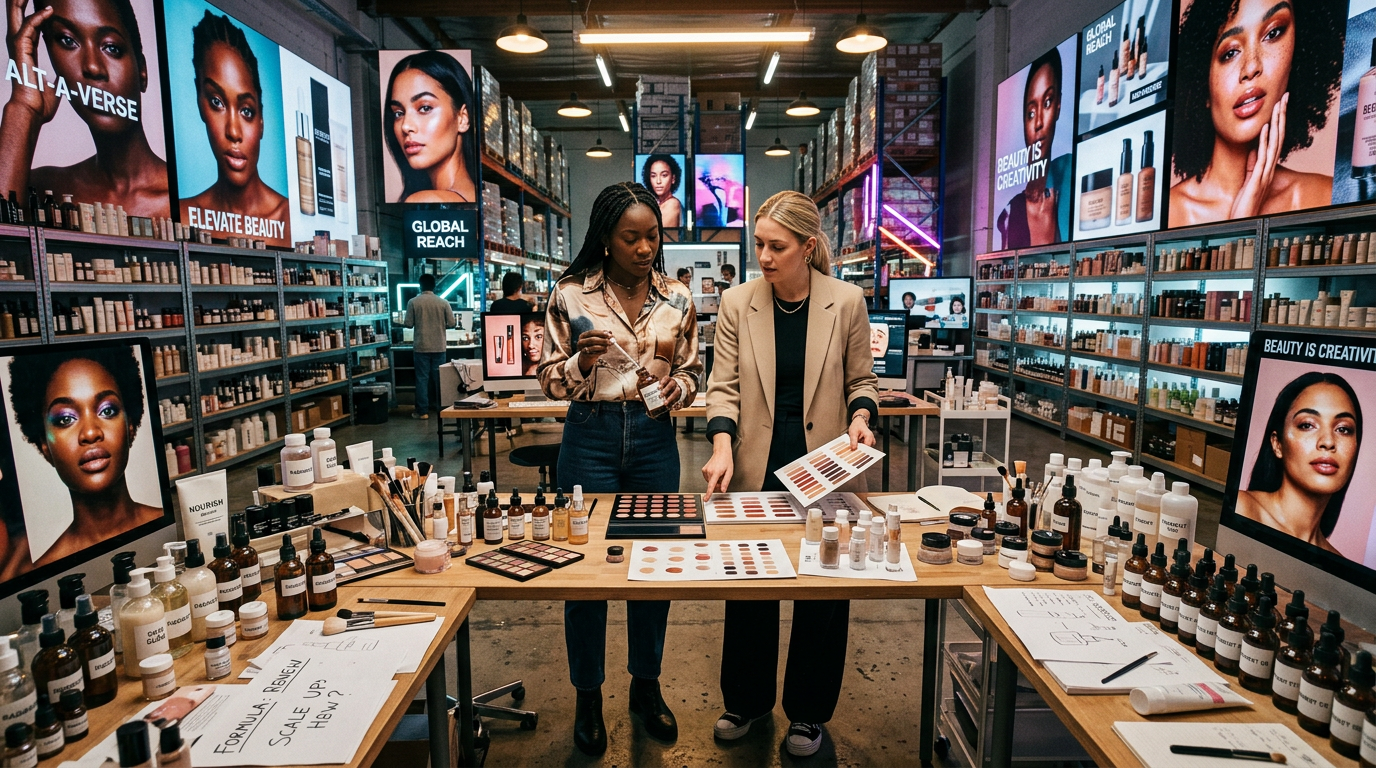
The Creative Collapse Series - Episode Eight
The beauty industry has become the most legible case study in the structural dynamics this series has been examining, partly because the failures have been more visible than in other creative sectors, partly because the timeline between cultural breakthrough and structural crisis has been compressed enough that the pattern is impossible to attribute to coincidence, and partly because the specific historical moment of 2020 created conditions that concentrated years of structural pressure into a single, well-documented cycle. What happened to Black-owned beauty brands between 2020 and 2025 is not primarily a story about individual business decisions. It is a story about what the creative economy promises and what it is actually designed to deliver, and the gap between those two things is the subject of this episode.
What the Beauty Industry Requires
Unlike fashion, where the complexity of production is at least partially visible to consumers through the language of manufacturing and supply chain, beauty operates with a layer of apparent simplicity that conceals its operational demands. A lipstick seems like a straightforward product. Its formulation requires cosmetic chemistry expertise, stability testing across temperature and humidity conditions, skin sensitivity and safety assessment, regulatory compliance with different standards across different markets, packaging that meets both aesthetic and functional requirements, and manufacturing partnerships capable of producing it consistently at the quality and volume that retail relationships require. This is before the product reaches a customer. After it does, the brand must manage inventory cycles that are tightly connected to revenue cycles, maintain the marketing visibility that social media platforms require to sustain consumer attention, and navigate retail relationships with major beauty retailers whose purchase order requirements can create capital needs that exceed what the brand's working capital can support.
None of this is insurmountable. It is all significantly more operationally complex than the beauty industry's visual culture suggests, and that gap between perceived and actual complexity is part of what makes the beauty sector a reliable generator of the specific pattern this episode examines: rapid cultural breakthrough, rapid scaling pressure, structural crisis, and in too many cases, closure.
The 2020 Cycle and Its Consequences
The surge of consumer enthusiasm for Black-owned beauty brands in 2020 was genuine in its motivation and damaging in its structural consequences. The demand growth that followed George Floyd's murder and the public reckoning with racial inequality created conditions that accelerated the timeline of multiple brands simultaneously, requiring scaling decisions under time pressure without the capital infrastructure that responsible scaling requires.
Ami Colé, founded by Diarrha N'Diaye-Kamara, is the most extensively documented of these cases and the one whose closure has been most carefully examined in public discourse. N'Diaye-Kamara brought genuine qualifications to the founding of Ami Colé: she had worked in brand strategy and community building at Glossier, she had a clear and specific insight about what melanin-rich skin needed that the mainstream beauty industry was not providing, and she understood the consumer she was building for because she was that consumer. The products were formulated carefully. The brand community was built with genuine attention and reciprocity. The cultural resonance was earned rather than manufactured.
Ami Colé raised venture capital, which provided capital access that most independent beauty founders never achieve. It secured retail partnerships with major beauty retailers, which provided distribution access that validated the brand's commercial potential. It received editorial coverage and critical attention that positioned it as one of the most significant launches of its moment. By every metric that the beauty industry uses to evaluate the promise of a brand, Ami Colé was doing what it was supposed to be doing.
The closure, announced in 2024, reflected the gap between what those metrics measure and what actually determines whether a consumer product business can sustain itself over time. Venture capital designed for technology companies does not translate directly into working capital for a production-based beauty business. Retail partnerships that require consistent inventory fulfilment at scale create capital needs that the venture investment may not cover adequately. The marketing investment required to maintain the visibility that social media platforms demand as the condition of consumer attention operates as a continuous cost that grows with the brand's audience rather than declining as the brand scales. The combination of these pressures, in a market whose competitive intensity had increased significantly as the 2020 surge of interest in Black-owned brands attracted both new brands and additional attention from established players, produced conditions that the structural foundation of the business was not designed to sustain.
Ami Colé is not an isolated case. Ceylon, founded by Naeemah LaFond with deep professional expertise in hair and beauty and a genuine community of loyal customers, closed. Koils by Nature, which had built over a decade of community trust in the natural haircare space before the 2020 surge brought it mainstream attention, closed. The Established closed. Pattern Beauty, founded by actress and entrepreneur Tracee Ellis Ross with explicit attention to building a brand for textured hair, has faced challenges. Each of these closures reflects a different specific set of circumstances. Together, they constitute a pattern whose causes are structural rather than individual.
What Capital Access Actually Changes and Does Not Change
Pat McGrath Labs demonstrates what happens to a Black-founded beauty brand when institutional capital access is available at a scale commensurate with the brand's commercial ambition. Pat McGrath entered the beauty industry with the most extensive creative credibility of any beauty founder of her generation: four decades of defining global beauty aesthetics across fashion's most significant editorial and runway contexts had given her both a genuine aesthetic authority and a global network of relationships with the creative community whose endorsement shapes beauty industry conversation.
When Pat McGrath Labs debuted in 2015, the products sold out within minutes of release, driven by McGrath's reputation and a consumer base that had been watching her define beauty standards for decades. The 2018 investment from Eurazeo Brands, which valued the company at over one billion dollars, provided the manufacturing scale, distribution infrastructure, and global marketing resources that allowed the brand's commercial ambition to be supported by operational infrastructure commensurate with it.
The contrast with Ami Colé is instructive not because it reflects a difference in the quality of the founding vision or the cultural significance of the brand, but because it reflects the structural reality of what capital access at different scales makes possible. McGrath's entry into the beauty industry was backed by a level of pre-existing credibility and social capital that provided access to institutional investment on terms that most Black beauty founders cannot access regardless of the quality of their founding vision or the strength of their market insight. The structural barrier to capital is not primarily about the quality of the brand. It is about the network relationships through which institutional capital is accessed, and those network relationships reflect decades of structural exclusion that a surge of consumer enthusiasm in 2020 was never designed to address at the level required.
The Fearless Fund and What Its Legal Challenge Revealed
The Fearless Fund was founded by Arian Simone and Ayana Parsons to provide investment capital specifically to Black women-founded businesses, addressing the documented gap in venture capital access for this demographic. In 2023, the fund was challenged in federal court by a conservative legal organisation arguing that the grant programme it operated violated Section 1981 of the Civil Rights Act of 1866, a statute written to protect Black Americans' right to enter into contracts following the Civil War. The court agreed. The fund was blocked from disbursing grants that had already been raised from corporate partners who had publicly committed to supporting Black-led investment infrastructure.
The legal mechanism used to prevent investment in Black women-founded businesses was a civil rights statute whose authors could not have imagined this application. The consequence was that the specific financial infrastructure designed to address the structural gap that this series has been documenting was dismantled through a legal argument that inverted the statute's historical purpose. This is not a footnote to the beauty brand pattern. It is one of its structural causes. The absence of investment infrastructure specifically designed for the founders who most need it, combined with the legal and political conditions that make building that infrastructure difficult to sustain, produces the pattern of closures that this episode examines.
The Sephora Accelerate Programme and Its Limits
Sephora's Accelerate programme, launched in 2016 and expanded in 2020 as part of the retailer's diversity commitments, provides participating brands with mentorship, marketing support, and the potential for retail placement. It is a genuine attempt to address the access gap that independent beauty founders face, and several brands that have participated in the programme have achieved meaningful commercial progress as a result.
It is also insufficient as a structural solution to the infrastructure gap this series has been documenting. Mentorship and marketing support do not provide the working capital that retail placement requires. The purchase order financing that allows a brand to fulfil a Sephora order without tying up capital that the business needs for its next production cycle is not a standard feature of accelerator programmes. The operational expertise required to manage the specific challenges of scaling a consumer product business through a major retail relationship is not fully captured in mentorship from founders who have navigated different challenges in different market conditions. The programme opens a door. The infrastructure that would allow brands to sustain themselves after walking through it remains insufficiently developed.
The Formulation and Regulatory Gap
One dimension of beauty brand structural challenge that receives less attention than capital access is the technical complexity of product development and regulatory compliance. Ron Robinson's Beautystat illustrates this dimension particularly clearly. Robinson spent years as a cosmetic chemist developing products for major corporations before founding his own brand, giving him a level of technical expertise in formulation that most independent beauty founders do not possess. His vitamin C serum achieved genuine technical differentiation, offering stability that competing products could not provide, and built a loyal following among skincare consumers who understood what the formulation difference represented.
The structural challenge that Beautystat navigated, and continues to navigate, was not formulation. It was everything that surrounds formulation: the manufacturing partnerships capable of producing the product at the quality and consistency that the brand's scientific credibility requires, the regulatory compliance processes that differ across markets and that require expertise and capital that most independent founders cannot easily access, the retail negotiation experience that allows a brand to secure shelf space on terms that make commercial sense rather than terms that favour the retailer. Technical excellence in the product does not eliminate the structural complexity of bringing that product to market, sustaining it through supply chain challenges, and building the commercial infrastructure that allows it to reach the consumers it was designed for.
What the Beauty Industry's Structure Actually Rewards
The beauty industry's structure rewards brands that can demonstrate rapid revenue growth, and it rewards them with the retail partnerships, press attention, and investor interest that accelerate the scaling pressure that this episode has been examining. This is not a conspiracy against independent brands. It is the operating logic of an industry whose major institutions, the retailers, the beauty media, the investment community, have built their own commercial models around specific assumptions about what a successful beauty brand looks like and how it grows.
Those assumptions reflect the operating conditions of brands with significant institutional backing. They do not reflect the operating conditions of most independent beauty founders, and the consequence is that the signals the industry uses to identify promising brands, rapid growth, social media momentum, retail traction, and celebrity endorsement, are simultaneously the signals that accelerate the structural pressures that make those brands difficult to sustain without institutional infrastructure they do not yet have.
This is the beauty brand pattern at its core. Visibility creates demand. Demand creates scaling pressure. Scaling pressure creates capital needs. Capital needs exceed what the brand's financial structure can support. Structural crisis follows. And the public narrative treats the crisis as evidence of the brand's failure rather than as the predictable output of a system that was not designed to support the kind of brands it celebrates.
What Would Have to Change
Revenue-based financing models calibrated to the cash flow characteristics of consumer product businesses rather than the equity return logic of venture capital exist in limited forms and have not been developed at the scale that the beauty industry's independent brand ecosystem requires. Inventory financing specifically designed for the purchase order requirements of retail partnerships exists through a small number of specialised lenders and has not reached most of the founders who need it. Shared formulation and manufacturing infrastructure that would allow independent beauty brands to access the technical and production resources that major brands have built internally has been proposed and partially developed in limited contexts without achieving the scale that would make it structurally meaningful.
What would have to change at the structural level is the recognition that the beauty industry's current organisation produces the pattern this episode has documented systematically and that addressing the pattern requires institutional redesign rather than better individual navigation of a system built around different priorities. The founders who built Ami Colé, Ceylon, and Koils by Nature were not navigating the system poorly. They were navigating a system that was not built for them, and the difference between those two descriptions is the difference between a personal failure and a structural one.
The final episode of this series turns from diagnosis to possibility, examining what the creative economy would need to build if it were genuinely committed to supporting the creators who supply its cultural energy rather than celebrating their visibility and absorbing the consequences of their structural collapse.
The Creative Collapse Series is an ongoing investigation into the structural pressures shaping the modern creative economy.