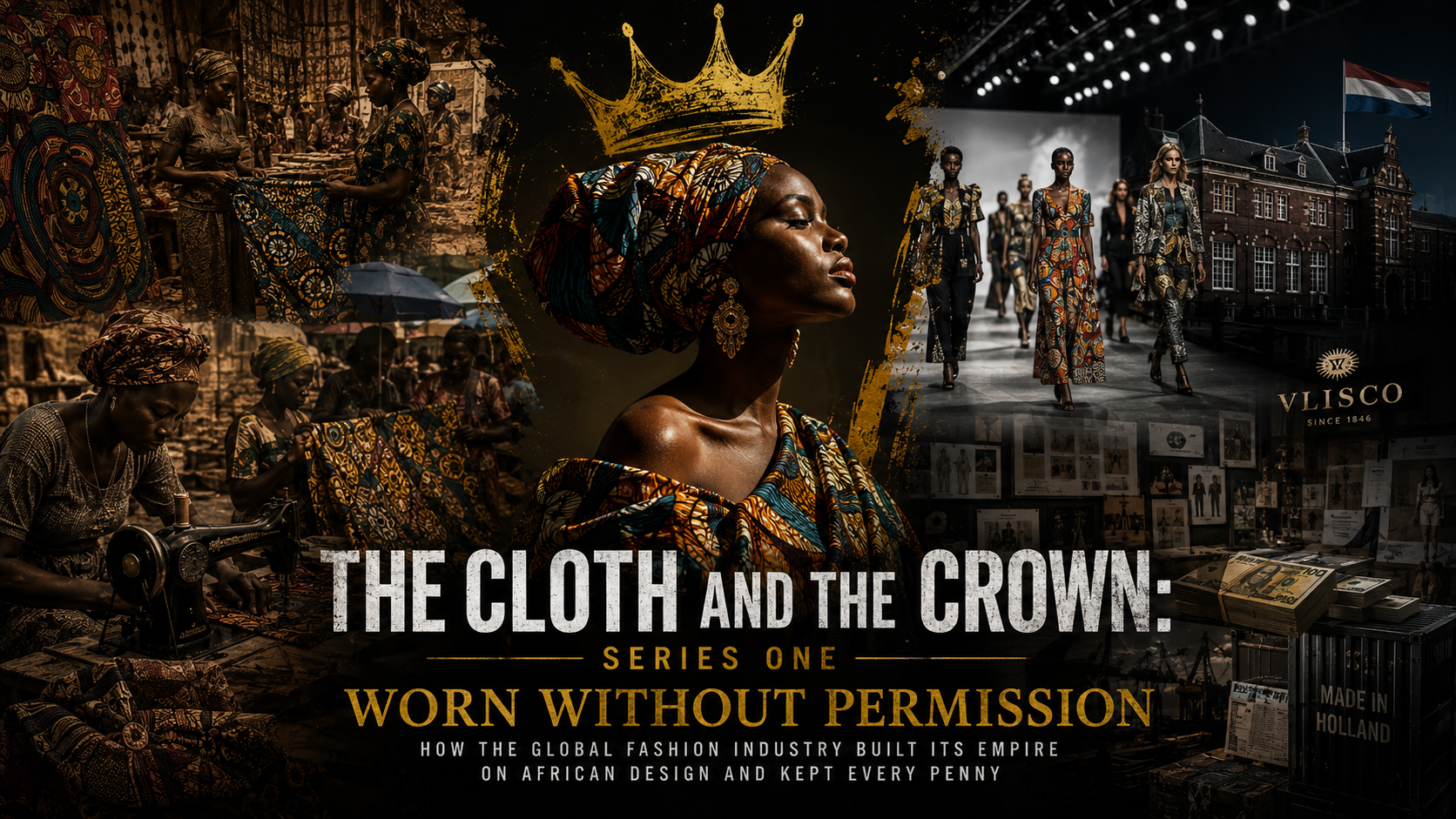
THE CLOTH AND THE CROWN: SERIES ONE
WORN WITHOUT PERMISSION
How the Global Fashion Industry Built Its Empire on African Design and Kept Every Penny
Series Overview, Architecture and Master Content Map
Investigative Standard & Intent
This document is a product of The Multiverse and is grounded in Structural Imagination. The following analysis is a forensic examination of systems and architectures; it is not intended to target or attack any specific individual, institution, or company.
Every claim, figure, and contract term presented is drawn exclusively from verified public records and is fully attributed in the Reference Documents archive. This work is for the purposes of education, analysis, and civilisational record.
"Vlisco has been selling Africans their own cultural identity since 1846. The company is Dutch. The cloth is called African. The money goes to the Netherlands."
— The Multiverse
THE INVESTIGATIVE ARGUMENT
Ankara, wax print, and African print serve as the global visual shorthand for African fashion and cultural belonging. Yet, the commercial engine behind this aesthetic identity sits in Helmond, the Netherlands.
Originating from a 19th-century Dutch attempt to replicate Indonesian batik for colonial trade, the wax-resist printed cotton cloth found its most lucrative market in West Africa by the 1890s. Over the next 130 years, Vlisco and its imitators built a multi-million dollar empire selling West African consumers a textile those consumers adopted as their own cultural emblem.
This series uncovers a consistent architecture of extraction within the global fashion system. From the Dutch control of Ankara to unnamed inspirations in Dior collections, unattributed patterns in Zara print runs, and uncredited kente references in French luxury lines, the methods vary but the direction of value flow remains identical: African design generates massive commercial value, while non-African entities capture the profits.
EDITORIAL & METHODOLOGICAL FRAMEWORK
- Evidentiary Rigor: Every claim is sourced, dated, and attributable, translating luxury conglomerate financial reporting and intellectual property treaties into a documented, structural map of value extraction.
- Community Accountability: Produced in active consultation with African creative practitioners, textile communities, legal scholars, and cultural institutions, ensuring the work serves as an actionable asset for the communities it documents.
- Modular Architecture: The twelve analytical documents progress from historical critique to economic blueprints, designed to stand independently while delivering a unified case for creative sovereignty.
MASTER CONTENT MAP
[ FREE TIER ]
- 01: The Cloth Nobody Owns The complete history of wax print fabric from its Dutch colonial origins to its modern commercial architecture, contrasting corporate profits against what African weavers actually earn.
- 02: Runway Archaeology A chronological, documented examination of uncredited African aesthetic sources across fifty years of Western fashion, including YSL (1967), Valentino (2015), and the institutionalised appropriation within resort wear.
- 03: The Luxury Conglomerates and Their African Debts A financial and creative audit of LVMH, Kering, and Richemont, calculating what was taken, what was earned, and what is owed to African creative inheritance.
[ BUILDER TIER ]
- 04: Kente and the Question of Intellectual Property An analysis of Kente’s December 2024 UNESCO inscription, Ghana's WIPO and WTO protection campaigns, and the institutional mechanisms required to safeguard traditional patterns.
- 05: The Legal Architecture of Appropriation Examining the structural flaws within international IP law, TRIPS, and WIPO frameworks that make the exploitation of traditional African knowledge legally permissible.
- 06: The Supply Chain and Where It Goes A forensic economic breakdown of the fashion pipeline from cotton farming and weaving to manufacturing, mapping exactly where value is captured and where it is drained.
- 07: Fast Fashion’s African Problem The operational mechanics of mass-market pattern theft by giants like Zara, H&M, and Shein, exposing their production pipelines and the legal enforcement gap.
- 08: African Textile Heritage and Its Commercial Potential A comprehensive economic survey of Kente, Kanga, Adire, Bogolan, and Kuba cloth, assessing their commercial viability under protected, African-owned terms.
[ VAULT TIER ]
- 09: The African Textile IP Blueprint An operational framework providing functional legal mechanisms, registration processes, and licensing strategies for African textile intellectual property.
- 10: The African Textile Industry Blueprint A concrete infrastructure plan for competitive continental manufacturing, detailing cotton industry development, weaving infrastructure, and global quality standards.
- 11: The Licensing Model That Works Model agreements, revenue distribution frameworks, and community benefit-sharing models designed to turn global interest into functional, scaled revenue for local artisans.
- 12: The New African Fashion Materials Economy A master implementation document for policymakers and continental organisations, linking IP protection to supply chain development to turn cultural legacy into a sustainable economic engine.