Core 5: What is the "Creative Economy"?
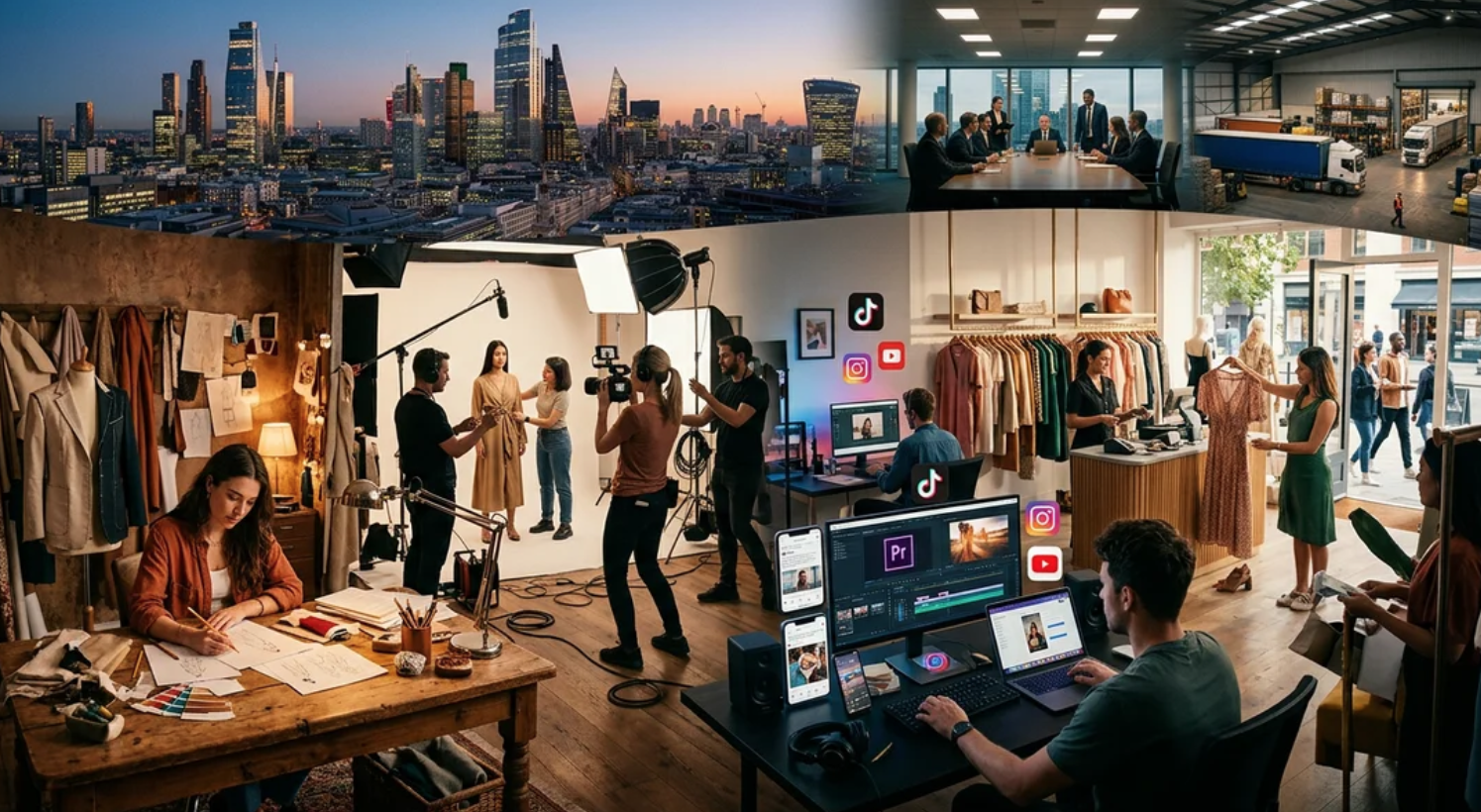
Understanding the System Behind Culture, Media, and Innovation
Most people who work in the creative industries have never been taught how those industries actually function. They were taught craft. They were taught technique. They were taught, in various ways, how to produce work that is compelling, original, and resonant. What they were rarely taught and this is a very important note; what almost no formal creative education addresses seriously is the system that sits beneath the work. The economic architecture that determines who profits from creativity, who retains control over it, who shapes its direction, and who, despite producing work of genuine cultural significance, remains structurally excluded from the wealth that work generates.
This is not a minor gap. It is the central gap and closing it begins with understanding what the creative economy actually is, not as a buzzword, not as a policy category, but as a living system with its own logic, its own power structures, and its own deeply embedded patterns of value creation and value extraction.
The Standard Definition and Why It Falls Short
The term "creative economy" was popularised in the early 2000s, most notably by the British economist John Howkins, who defined it as the economic value derived from creative ideas. Institutions like UNCTAD, UNESCO, and the World Bank subsequently developed their own frameworks, typically organising the creative economy into sectors: advertising, architecture, arts and crafts, design, fashion, film, music, publishing, software, television and radio, and video games. By most estimates, the global creative economy generates somewhere between four and six trillion dollars annually and accounts for a significant share of employment in both developed and developing nations.
These definitions are not wrong but I strongly believe they are incomplete in a way that matters enormously. They describe the outputs of the creative economy; the sectors, the products, the measurable economic activity without adequately describing the system that produces those outputs and determines how the value within them is distributed. Knowing that the global music industry generates twenty-six billion dollars a year tells you very little about why the artist who created the work that generated that revenue often sees a fraction of a percent of it. Knowing that Nollywood produces more films annually than Hollywood tells you very little about why Nigerian filmmakers still struggle to access the distribution infrastructure and financing systems that would allow those films to generate returns commensurate with their cultural reach.
To understand the creative economy as it actually operates rather than as it is officially described, you have to look at the system beneath the numbers.
What the Creative Economy Actually Is
The creative economy is not simply the collection of industries that produce creative goods and services. It is a system through which human creativity is converted into economic value and, critically, a system through which that value is then distributed, concentrated, and controlled. The distinction matters because the process of conversion is never neutral. It always involves infrastructure, institutions, capital, and power relationships that determine who benefits from creativity and who does not.
At its most fundamental level, the creative economy operates through four interconnected elements: creation, which produces the cultural and intellectual raw material; infrastructure, which organises and enables production and distribution at scale; capital, which funds the system and determines what gets made and what gets to market; and intellectual property, which legally defines ownership and controls how value flows from one party to another. Understanding how these four elements interact and understanding who controls each of them is the beginning of a genuine understanding of how the creative economy works.
What this framework immediately reveals is something that the standard sector-based definitions conceal: the creative economy is not primarily a system for rewarding creativity. It is a system for organising creativity into productive economic activity, and the interests of those who organise the system are not always aligned with the interests of those whose creativity powers it.
The Infrastructure Behind Creative Industries
Every creative industry that operates at scale is built on infrastructure that most creatives never see and rarely think about. In the music industry, that infrastructure includes recording studios, mastering and distribution services, performing rights organisations, licensing systems, and the algorithmic architecture of streaming platforms that determines which songs are surfaced and which are buried. In film, it includes production financing systems, studio distribution networks, festival circuits that function as gatekeeping mechanisms, and the global chain of exhibition infrastructure through which films reach audiences. In fashion, it includes textile supply chains, manufacturing networks, wholesale and retail distribution systems, and the concentrated ecosystem of fashion weeks, trade publications, and institutional buyers that collectively determine what is considered commercially viable.
This infrastructure is not incidental to the creative economy. It is the creative economy, in the sense that without it, creative work cannot scale, cannot reach audiences at the level required to generate significant economic returns, and cannot be sustained as an industry rather than a collection of individual projects. And because infrastructure is expensive to build and difficult to replicate, it tends to concentrate in specific places and in the hands of specific institutions which means that the geography of creative infrastructure is also, inevitably, the geography of creative power.
Hollywood's dominance in global film is inseparable from the studio system that was constructed over more than a century; the production infrastructure, the distribution networks that reach cinemas on every continent, the talent agencies, the financing mechanisms, and the legal and contractual systems that allow complex multi-party productions to be organised and executed at scale. When people say that Hollywood shapes global culture, what they are really saying is that Hollywood built the infrastructure required to deliver stories to the entire world, and that infrastructure gives it leverage that no amount of creative talent elsewhere can simply overcome through the quality of its work alone.
The same analysis applies to K-pop. South Korea's emergence as a global cultural export powerhouse was not a spontaneous expression of cultural energy. It was the product of deliberate infrastructure construction: the trainee system that industrialised talent development, the production companies that vertically integrated songwriting, choreography, styling, and marketing, the government investment in cultural export infrastructure, and the strategic use of digital platforms to reach global audiences that traditional distribution systems would never have prioritised. The creativity was always there. The infrastructure was built intentionally, over decades, with a specific economic and geopolitical outcome in mind.
Who Actually Captures the Value
This is the question that the official creative economy discourse consistently sidesteps, and it is the one that matters most to the people who actually do the creative work.
The answer, in most sectors and most contexts, is that the majority of economic value generated by creative work is captured not by the people who create it but by the infrastructure that carries it. In the recorded music industry, the major labels: Universal, Sony, and Warner collectively control approximately seventy percent of global recorded music revenue. The artists on their rosters, even successful ones, typically receive between fifteen and twenty percent of the revenue their work generates after recoupment, which is the process by which the label recovers its investment in an artist's development and marketing before paying royalties. Independent artists on streaming platforms face a different but structurally related problem: Spotify pays between three and five thousandths of a dollar per stream, which means that an artist needs to generate approximately three hundred streams to earn one dollar of revenue. An album that receives a million streams; a genuinely significant achievement, generates somewhere between three and five thousand dollars in streaming royalties.
Streaming platforms themselves are instructive here. Spotify, despite paying relatively modest rates to artists, has a market capitalisation that has at various points exceeded forty billion dollars. The value that platform has created for its shareholders is built almost entirely on the creative work of musicians, most of whom earn very little from the platform's existence. This is not an accident or an oversight. It is the predictable outcome of an infrastructure system in which the platform which is the distribution infrastructure, captures the majority of the value generated by the content that flows through it.
The same dynamic operates in film and television, where streaming platforms like Netflix have fundamentally restructured the economics of content creation. Netflix's model of acquiring content for flat fees rather than licensing it on a revenue-share basis means that creators whose work drives subscriber growth receive no share of the value that growth generates. A documentary that draws millions of new subscribers to the platform earns its director the fee they negotiated upfront. The billions in subscriber revenue that documentary helped generate belong to Netflix.
In fashion, the global fast fashion industry, think of Zara, H&M, Shein amongst others have built their business models around the rapid commodification of creative ideas developed by independent designers and smaller labels. The creative ideas travel. The economic value consolidates at the infrastructure layer.
The African Creative Economy: Talent Without Infrastructure
Nowhere is the gap between creative output and economic capture more visible than in the African creative economy, and particularly in the Nigerian music industry.
Afrobeats, the genre that emerged from Lagos (think Felt Kuti) and has spent the past decade and more reshaping global popular music, is one of the most significant cultural developments in the international music industry in a generation. Artists like Burna Boy, Wizkid, Davido, Asake, and Tems have achieved genuine global stardom, performing at the world's most prestigious venues, collaborating with the biggest names in international music, and generating cultural influence that extends far beyond the African continent. The narrative layer, in terms of the Narrative Power Stack, is extraordinary. Afrobeats has achieved something that decades of African creative output did not: it has made the world actively want what countries like Nigeria, Ghana, South Africa are producing.
But the infrastructure layer tells a different story. The majority of Afrobeats revenue is collected and distributed through systems that African artists and industry professionals do not control. Streaming revenue flows through platforms whose licensing terms were not designed with African markets in mind and whose payment systems often make it difficult for artists based in Nigeria or Ghana to receive royalties efficiently. Live performance revenue, which has become the primary income source for successful African artists, is managed through international booking agencies, promoters, and management companies that are predominantly based in London, Los Angeles, and New York. The intellectual property that underlies these artists' catalogues is increasingly being acquired by major labels and publishing companies, predominantly American and British that recognise its long-term value precisely because the infrastructure to exploit that value at scale does not yet exist in the originating ecosystem.
The result is a pattern with uncomfortable historical echoes: a culture produces extraordinary creative work, the world consumes and celebrates that work, and the economic value generated by that consumption accumulates primarily in the hands of the infrastructure owners rather than the creators or the ecosystem that produced them.
Nollywood presents a related but distinct version of the same structural challenge. By volume, Nigeria's film industry is one of the largest in the world, producing thousands of films annually and generating a genuine domestic audience of hundreds of millions across the African continent. But the infrastructure gaps; limited formal cinema exhibition infrastructure, the absence of significant international distribution, underdeveloped financing systems, and a piracy ecosystem that has historically made it difficult to monetise content have constrained the industry's ability to convert its extraordinary creative output and audience scale into the kind of economic returns that would allow it to compete on equivalent terms with Hollywood or Bollywood.
The Role of Policy and Intellectual Property
The creative economy does not exist outside of political and legal systems. It is shaped by them at every level, and understanding how policy and intellectual property law function within the creative economy is essential to understanding why the system produces the outcomes it does.
Intellectual property; copyright, trademarks, patents, is the legal mechanism through which creative work is converted into a tradeable economic asset. Copyright law grants creators exclusive rights over their work for a defined period, in theory allowing them to control how that work is used and to extract economic value from it. In practice, the intellectual property system tends to benefit those with the resources to navigate, enforce, and exploit it, which, in the creative economy, means the large corporations that own catalogues, platforms, and distribution infrastructure rather than the individual creators who originally produced the work.
The history of the music industry is in large part a history of IP rights being transferred from creators to institutions. The standard recording contract, as it evolved through the twentieth century, typically assigned the copyright in recorded music to the label rather than the artist, in exchange for an advance and a royalty rate that would only be paid once the advance was recouped. The result is that the catalogues of some of the most culturally significant artists of the twentieth century, think of artists whose work defined entire genres and shaped global culture, are owned by corporations that had no creative involvement in their production and that acquired them through contracts that the artists, often young and without legal representation, signed without fully understanding the long-term implications.
Policy shapes the creative economy in other ways too. South Korea's cultural success was not purely a market outcome. It was actively constructed through a deliberate policy framework that included government investment in content production infrastructure, export promotion programmes, and the strategic deployment of cultural diplomacy through the Korean Wave initiative. The South Korean government recognised, in a way that few governments have matched, that cultural industries are not simply entertainment sectors but geopolitical and economic assets that warrant strategic investment and support. The results of that recognition are now visible across global popular culture.
By contrast, many African governments have been slower to develop the kind of policy infrastructure; intellectual property enforcement, export promotion, production incentives, infrastructure investment that would allow their creative industries to compete on equivalent terms in global markets. Nigeria's music and film industries have grown largely despite the policy environment rather than because of it, through the entrepreneurial energy of individual artists and industry participants rather than through strategic public investment in the systems that would allow that energy to compound into lasting institutional power.
Streaming, Platforms, and the New Infrastructure of Power
The digital revolution was supposed to democratise the creative economy and in some respects it did: the cost of production fell dramatically across almost every creative sector, distribution became theoretically available to anyone with an internet connection, and the gatekeeping power of traditional institutions was disrupted in ways that genuinely opened new pathways for creators outside the established centres of cultural power.
But what the digital revolution ultimately produced was not the elimination of infrastructure concentration. It was its relocation. The power that was once held by major labels, studio distribution arms, and publishing houses has not been abolished. It has migrated to a smaller number of platform companies; Spotify, Apple, Netflix, YouTube, TikTok, Meta that now control the distribution infrastructure of the global creative economy to a degree that no previous generation of media institutions could have imagined.
These platforms are not neutral conduits. They are active shapers of creative economies, through the algorithmic systems that determine which content is discovered and which is ignored, through the licensing terms they negotiate with rights holders, through the data they collect and the ways they use it to understand and predict consumer behaviour, and through the sheer economic scale that gives them leverage over every other participant in the creative system. When TikTok's algorithm decides that a particular sound or aesthetic is worth amplifying, it can generate cultural moments that previously would have required years of industry investment to manufacture. When it decides that a creator is no longer worth promoting, it can make them invisible overnight. This is infrastructure power in its most concentrated modern form.
For African creative industries, the platform economy presents both an opportunity and a structural challenge. The opportunity is real: digital distribution has allowed Afrobeats and Nollywood content to reach diaspora audiences and international listeners without the mediation of Western gatekeepers. But the challenge is equally real: the economics of the platform era are structured in ways that consistently undervalue content from markets with lower advertising rates, and the data and infrastructure that would allow African creative industries to build their own platform capabilities remain largely outside the ecosystem.
Why Creatives Remain Underpaid
The persistent underpayment of creative workers is not an accident, a failure of markets to recognise value, or a temporary condition that will resolve itself as industries mature. It is a structural feature of a system in which the balance of power between creators and infrastructure owners is systematically weighted against creators in ways that are embedded in the legal, contractual, and economic architecture of the creative economy.
Several mechanisms drive this. First, the abundance of creative labour: the fact that for most creative roles, the supply of people willing to do the work significantly exceeds the demand gives infrastructure owners negotiating leverage that individual creators struggle to match. Second, the intellectual property system, as noted above, tends to transfer the long-term value of creative work from creators to institutions through contractual mechanisms that creators often lack the knowledge or resources to resist effectively. Third, the concentration of distribution infrastructure in the hands of a small number of platform companies means that creators have limited alternatives to accepting the terms those platforms offer. Fourth, the informal nature of much creative work; the prevalence of project-based, freelance, and self-employment arrangements means that creative workers often lack the collective bargaining mechanisms that workers in other sectors have used to improve their economic position.
None of these are immutable laws of economics. They are design features of a system that was built by people with specific interests and that can, in principle, be redesigned by people with different ones. But understanding that they are structural; that they are features of the system rather than temporary imperfections, is a necessary precondition for changing them.
Connecting to Narrative Engineering and Systems Design
What the creative economy ultimately requires; what the gap between cultural influence and economic sovereignty demands, is not better individual strategies but better systems thinking. This is what Narrative Engineering, as my discipline, is designed to provide.
Narrative Engineering does not begin with the question of how to tell a better story. It begins with the question of how the system that carries stories actually functions: who built it, whose interests it serves, where value is created and where it is captured, and what structural interventions would be required to produce more equitable and more sustainable outcomes. Applied to the creative economy, this means looking beyond the creative work itself to the infrastructure that distributes it, the capital systems that fund and scale it, the intellectual property frameworks that determine who owns it, and the policy environments that shape the conditions under which it operates.
This systems-level perspective is not abstract. It has direct implications for how individual creatives, creative organisations, and creative ecosystems should think about strategy. It suggests that the most important investments a creative ecosystem can make are not necessarily in producing more or better content, but in building the infrastructure layers that allow content to generate returns, in developing the capital systems that keep value circulating within the ecosystem, and in achieving the degree of institutional sovereignty that allows the ecosystem to determine its own direction rather than being perpetually dependent on external systems whose interests do not align with its own.
The Question the Creative Economy Forces You to Ask
Here is what understanding the creative economy as a system, rather than as a collection of industries, ultimately forces you to confront: the most important question in the creative economy is not "how do I make something great?" It is "who benefits when I do?"
For individual creatives, this question is about contracts, intellectual property, platform terms, and the structural positions of the companies and institutions they work with and through. For creative organisations, it is about infrastructure ownership, capital strategy, and the degree to which the value their work generates is retained within their ecosystem or extracted by external parties. For policymakers and institutions, it is about whether the frameworks they design and the investments they make are building the structural foundations for long-term creative economy development or simply optimising conditions for the extraction of creative value by interests that are already powerful.
These are uncomfortable questions. They require looking at systems rather than celebrating talent, at structures rather than narratising individual success stories, and at power rather than pretending the creative economy is a level playing field where merit determines outcomes. But they are the right questions and for creative economies that are serious about converting cultural influence into lasting economic and institutional power including, most urgently, the African creative ecosystems that are producing some of the most significant cultural work of this generation, they are the only questions that ultimately matter.
The next piece in this series examines what happens when those questions are not asked when creative economies develop strong cultural narratives and genuine creative talent without the infrastructure required to sustain and scale them. It is called: The Creative Economy Without Infrastructure.
This is part of the Narrative Engineering framework developed inside The Multiverse. To understand the structural forces this piece describes in greater depth, read The Narrative Power Triangle and The Narrative Power Stack.