Episode 1: When The Brand Goes Quiet
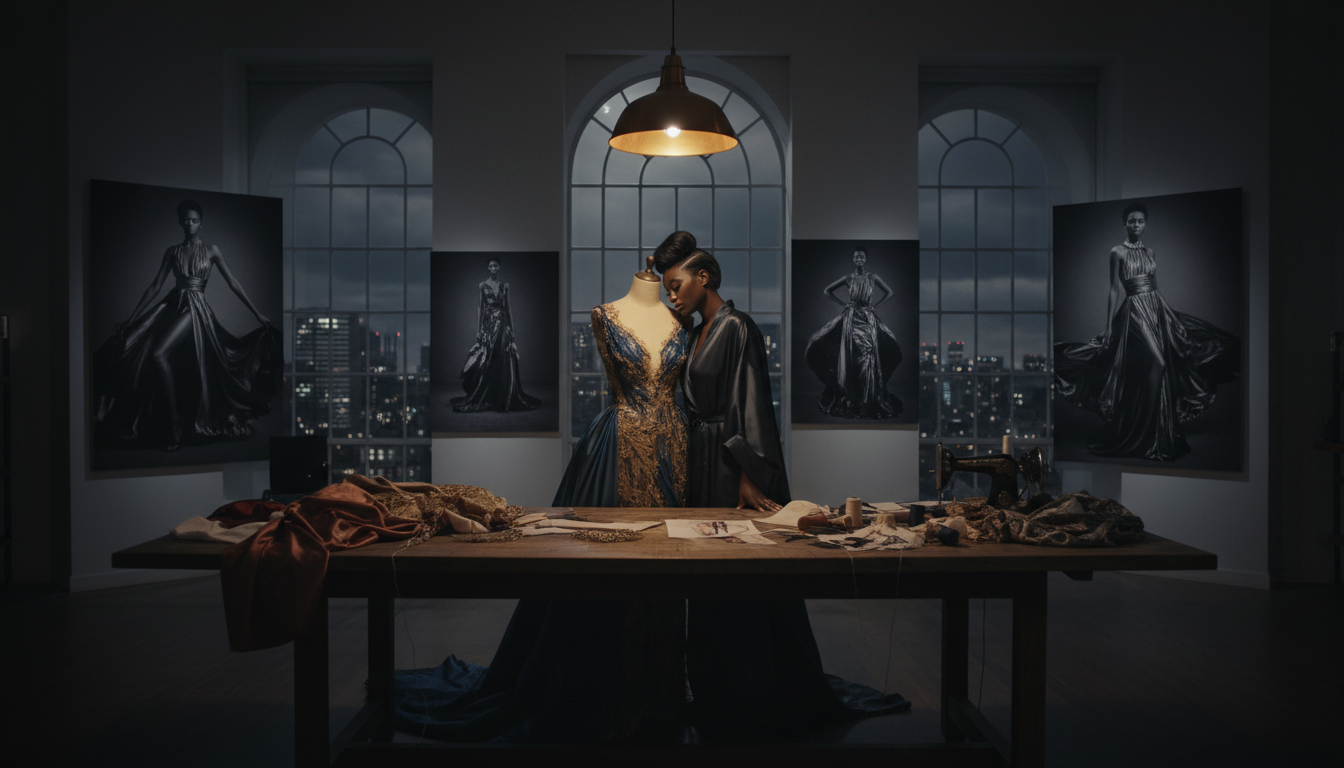
The structural pressures behind the uncertainty surrounding Hanifa
Moments of uncertainty in entrepreneurship rarely make headlines. Public attention tends to focus on visible milestones such as product launches, viral campaigns, or the cultural moments that elevate a brand into public consciousness. These events reinforce a widely circulated narrative about creative entrepreneurship: that successful founders move from breakthrough to breakthrough, building momentum as recognition grows.
However, the lived reality of building a brand is far more complex. Beneath the visible milestones that audiences celebrate lies a long period of experimentation, risk, operational pressure, and financial uncertainty. The most consequential moments in the life of a business often occur away from public attention, when founders are forced to confront difficult questions about sustainability, viability, and the long-term future of the enterprise they have built.
A recent reflection shared by Anifa Mvuemba, founder of Hanifa, offers a clear illustration of this dynamic. After more than fourteen years of building the brand, Mvuemba publicly acknowledged uncertainty about what the future might hold. In an industry that often celebrates rapid success and constant upward momentum, the significance of that statement should not be underestimated.
Fourteen years represents a substantial period of sustained entrepreneurial effort. In the context of fashion, where many independent brands struggle to survive beyond their early years, maintaining a brand for more than a decade already reflects an unusual level of persistence and resilience. Yet public perception often reduces that long journey to a handful of visible moments, particularly the viral 3D fashion show that brought Hanifa global attention and positioned the brand as an innovator within digital fashion presentation.
What such moments tend to obscure is the extensive foundation required to reach them. Long before global recognition, the brand was built through years of incremental work. Like many independent designers, Mvuemba began with limited financial resources and no external institutional support. There was no venture capital backing, no corporate parent company, and no large operational infrastructure capable of absorbing unexpected shocks.
In the early stages of the business, she reportedly fulfilled orders herself, managing production directly while simultaneously developing the creative identity of the brand. This level of direct involvement across multiple operational roles is typical among independent fashion founders. Designers frequently act not only as creative directors but also as manufacturers, logistics coordinators, marketers, and customer service representatives during the formative years of their businesses.
While this model allows founders to maintain creative control, it also places significant pressure on individuals as their companies grow. As demand increases, operational complexity expands rapidly. Production schedules must align with supplier availability. Manufacturing partners must meet quality expectations while adhering to tight delivery timelines. International shipping introduces additional layers of uncertainty, including customs delays, regulatory complications, and fluctuating logistics costs.
When any one component of this chain falters, the consequences can cascade throughout the entire business. A delay at the manufacturing stage may lead to missed delivery deadlines, which in turn generates customer dissatisfaction and refund requests. These operational disruptions often translate directly into financial strain, particularly for businesses operating with limited working capital.
The contemporary digital environment amplifies these pressures further. In previous decades, many operational challenges could be managed privately between companies and customers. Today, social media platforms frequently transform logistical problems into public discussions. When delays occur, customers may turn to digital channels to express frustration, and those conversations can quickly spread beyond the immediate customer base.
As a result, founders increasingly find themselves managing not only operational challenges but also public narratives about those challenges. The same platforms that once amplified a brand’s success can become spaces where setbacks are scrutinised and debated. When the difficulties facing Hanifa began to surface online, discussions about production delays and order fulfilment circulated widely across social media platforms, often attracting commentary from individuals who were not directly involved in the transactions themselves.
In this environment, logistical challenges are rarely interpreted solely as operational problems. Instead, they are frequently framed as indicators of broader issues related to competence, integrity, or brand management. This dynamic can create a situation in which founders are forced to address complex operational disruptions while simultaneously navigating reputational risk.
Entrepreneur Chika Uwazie later reflected publicly on the situation, highlighting a question that many founders encounter during periods of sustained pressure: whether the cumulative demands of entrepreneurship remain worth the personal and emotional cost. Her commentary resonated widely within the creative community because it articulated a reality that is rarely discussed openly.
For founders operating without substantial financial buffers or institutional support systems, the stakes of each operational challenge are significantly higher. Independent creative businesses often rely on continuous cash flow from customer orders to fund ongoing production. When disruptions occur, the margin for error can be extremely narrow. A sequence of delays or unexpected costs may quickly place the entire business under strain.
The broader context reinforces how precarious such situations can be. Widely cited entrepreneurship data indicates that a large percentage of small businesses fail within their first five years of operation. Those statistics become even more daunting for founders who lack generational wealth, investor backing, or access to established industry networks capable of providing strategic support during crises.
This reality raises an important structural question about the creative economy itself. While cultural industries are highly effective at elevating creative talent and generating public enthusiasm around innovative brands, they often lack the institutional frameworks necessary to support those brands as they mature.
Fashion, in particular, has historically celebrated creative vision while placing less emphasis on operational infrastructure. Designers are encouraged to innovate, to generate cultural moments, and to capture public attention. However, the systems that sustain long-term brand stability; reliable manufacturing networks, accessible financing structures, operational education, and crisis management support are far less visible and often far less developed for independent founders.
The result is a creative economy that excels at producing cultural impact but struggles to provide structural stability for the individuals responsible for generating that impact.
From this perspective, Mvuemba’s public acknowledgment of uncertainty should not be interpreted simply as a moment of individual vulnerability. Rather, it offers a rare window into the structural pressures facing many creative entrepreneurs. By speaking candidly about the difficulty of sustaining a brand under these conditions, she has highlighted a set of systemic challenges that extend far beyond a single company.
Behind every successful brand lies an intricate web of operational decisions, financial risks, and personal sacrifices made by the founder. Public narratives often focus on the visible achievements of entrepreneurship while overlooking the systems required to support those achievements over time.
Understanding those systems is essential if the creative industries hope to build environments in which innovative brands can survive and evolve rather than disappear prematurely.
The questions raised by the Hanifa story therefore extend beyond the future of one fashion label. They point toward a broader inquiry into the architecture of the creative economy itself: why so many culturally influential brands struggle to sustain themselves, and what structural changes might be required to ensure that the creators shaping culture are not left to navigate those pressures alone.
It is this inquiry that forms the foundation of The Creative Collapse Series, an ongoing investigation into the hidden structural dynamics that shape the rise and the quiet disappearance of creative brands.