Episode 6: The Infrastructure Gap
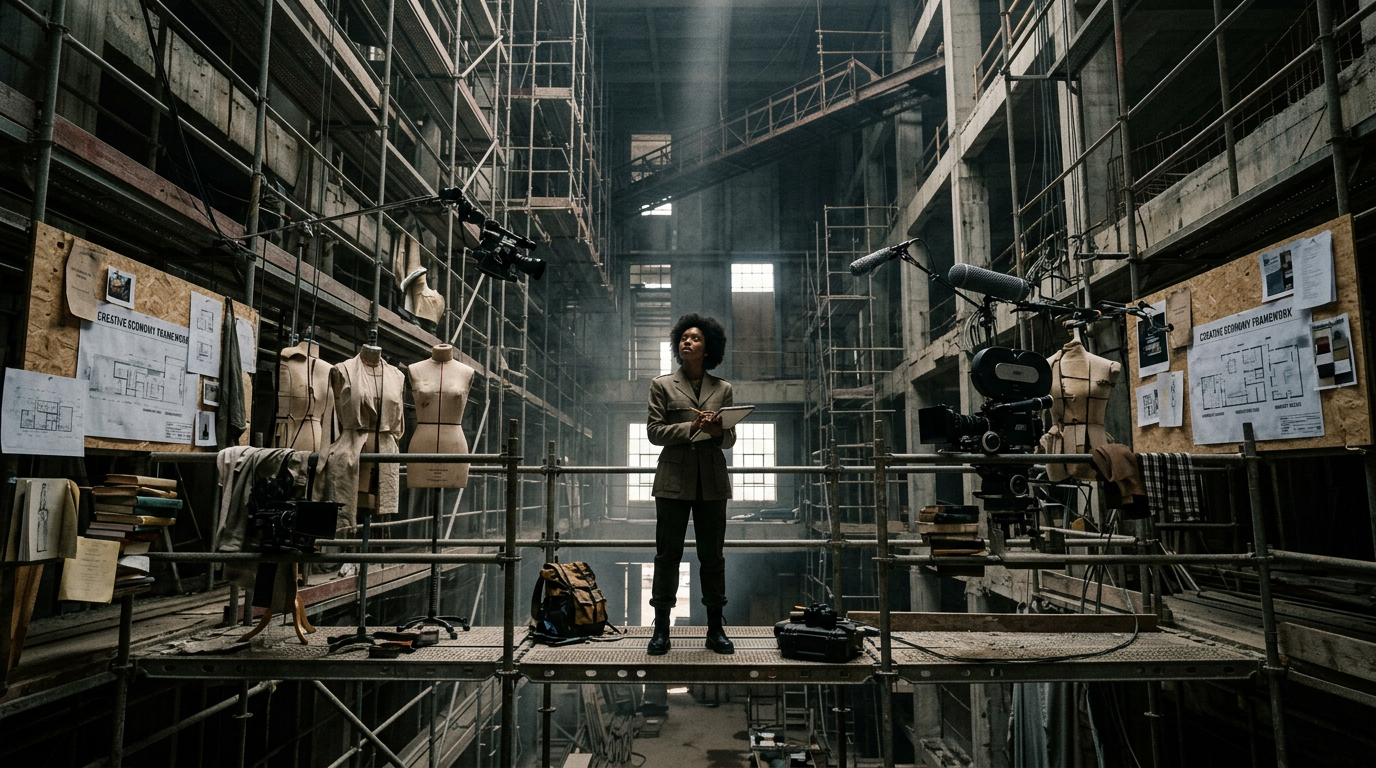
Why the creative economy continues to rely on individual resilience instead of institutional support
Across the creative industries, public narratives often celebrate the rise of individual creators. Designers launch influential fashion labels, musicians build global fan bases, writers produce best-selling books, and filmmakers introduce new cultural perspectives through independent productions. These achievements are widely recognised as evidence of the vitality and innovation within the creative economy.
Yet beneath these success stories lies a recurring structural challenge: the infrastructure required to sustain creative businesses is frequently underdeveloped.
Creative industries generate enormous cultural and economic value, but the institutional systems supporting independent creators often lag behind those available in more traditional sectors of the economy. Entrepreneurs operating within fashion, music, publishing, film, and digital media frequently find themselves navigating fragmented networks of suppliers, distributors, financiers, and marketing platforms without the coordinated support structures available to larger corporate entities.
The result is a creative ecosystem in which founders and artists are often expected to build cultural influence while simultaneously constructing the operational systems necessary to sustain their work.
This structural imbalance places significant pressure on individuals who must function not only as creators but also as strategists, negotiators, managers, and infrastructure builders.
Structural Pressure
The infrastructure gap manifests differently across creative sectors, but the underlying pattern remains consistent: independent creators are required to operate within systems designed primarily for large institutions rather than emerging entrepreneurs.
In fashion, designers depend on global manufacturing networks that prioritise large production orders and established corporate clients. Independent brands must negotiate access to these supply chains without the leverage of high-volume commitments or long-term contractual relationships.
Within music, artists face similar structural challenges. Independent musicians often rely on streaming platforms and digital distribution systems that provide global visibility but generate limited revenue per listener. Even artists with substantial audiences may struggle to convert cultural recognition into financial stability without touring, licensing deals, or additional income streams.
The publishing industry presents another version of this structural imbalance. Writers frequently depend on traditional publishing houses for distribution and marketing infrastructure. While these institutions provide access to established networks, they also concentrate decision-making power within a relatively small number of gatekeepers. Authors who pursue independent publishing routes gain creative control but must assume responsibility for editing, distribution, marketing, and audience development themselves.
Across each of these sectors, creators are operating within systems that were not originally designed to support independent entrepreneurship at scale.
Case Insight
The experience of Stella McCartney offers an example of how institutional partnerships can reshape the infrastructure surrounding a creative brand. When McCartney launched her label in the early 2000s, she did so through a partnership with the luxury conglomerate Kering. That relationship provided access to manufacturing networks, distribution channels, and financial resources that allowed the brand to expand internationally.
While McCartney’s creative vision remained central to the brand’s identity, the institutional infrastructure surrounding the company enabled it to operate on a scale that would have been extremely difficult for an independent designer to achieve alone.
Another example appears in the rise of Telfar, founded by Telfar Clemens. As demand for the brand’s signature shopping bag increased dramatically, Clemens and his team were forced to rethink traditional fashion production models. Rather than relying exclusively on conventional retail cycles, the brand introduced a “bag security program” that allowed customers to pre-order products before manufacturing began.
This approach effectively restructured part of the supply chain by aligning production volumes with confirmed demand. In doing so, it demonstrated how creative founders sometimes develop innovative solutions to infrastructure limitations when existing systems prove insufficient.
These examples highlight an important distinction: success in creative industries is often shaped not only by artistic talent but also by access to operational infrastructure capable of supporting growth.
Cross-Industry Pattern
The infrastructure gap extends well beyond fashion. In the music industry, artists such as Chance the Rapper built influential careers outside traditional record label systems by distributing music independently through digital platforms. While this model provided creative autonomy, it also required the artist and his team to construct their own distribution, marketing, and business operations which are all functions historically handled by record labels.
Similarly, within film and television, independent creators frequently depend on production grants, festival circuits, and temporary financing structures to bring projects to life. Directors and producers often spend years assembling funding from multiple sources before a single project can move into production.
These examples illustrate a consistent pattern across the creative economy: independent creators frequently act as both cultural innovators and infrastructure architects, designing the systems necessary to sustain their own work.
Systemic Implication
The persistence of these infrastructure gaps raises broader questions about how creative economies are organised. While creative industries are often celebrated for their cultural influence and economic contribution, the institutional frameworks required to support independent creators remain fragmented. Access to capital, manufacturing networks, distribution platforms, and professional services is frequently uneven, with established corporations benefiting from integrated systems that emerging creators must assemble piece by piece.
This structural imbalance places disproportionate responsibility on individuals who are already carrying the creative and strategic burden of building their brands.
When founders succeed under these conditions, their achievements are often interpreted as evidence that the system works. Yet the numerous creators who struggle or withdraw from these industries due to structural limitations receive far less attention. Understanding the infrastructure gap therefore requires shifting the focus from individual success stories to the systems that shape the broader creative landscape.
Forward Inquiry
If creative industries continue to depend heavily on individual resilience rather than institutional infrastructure, an important question emerges: what would a creative economy look like if its systems were intentionally designed to support independent creators?
Could shared manufacturing networks, alternative financing models, or cooperative distribution systems reduce the operational burden placed on founders? How might new institutional frameworks enable creators to focus more of their energy on innovation rather than survival?
These questions move the investigation closer to the heart of the structural challenges shaping the creative economy because even when infrastructure exists, independent creators still face another persistent tension: the expectation that independence itself should be the ultimate goal.
The next investigation therefore examines a powerful narrative within the creative industries, the idea that independence represents the highest form of creative success and why that narrative may conceal a far more complicated reality.
Part of The Creative Collapse Series; an ongoing investigation into the structural pressures shaping the modern creative economy.