Episode 5: The Founder Burnout Crisis
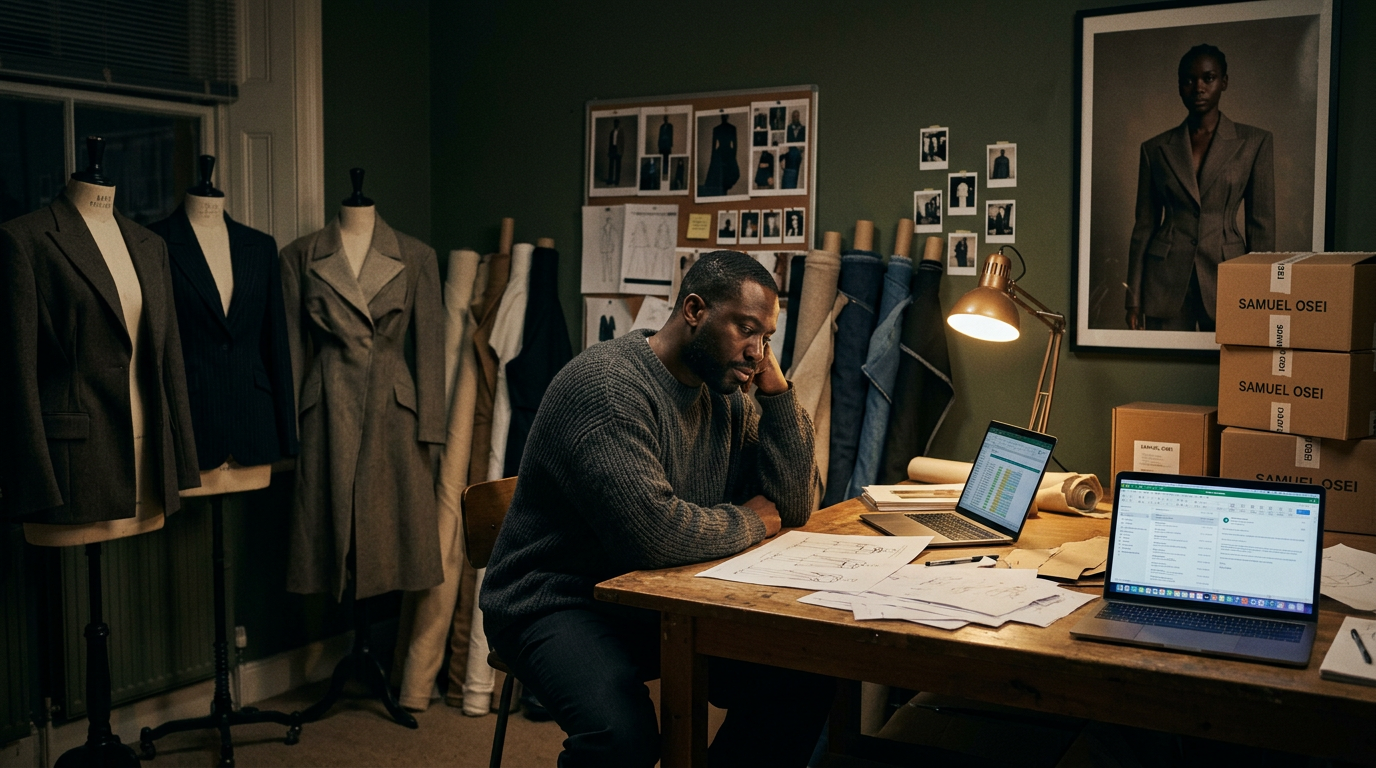
The hidden emotional cost of sustaining independent creative brands
Entrepreneurship within the creative industries is often framed through narratives of passion, resilience, and visionary leadership. Designers and founders are celebrated for their ability to transform ideas into brands that capture cultural attention. These stories emphasise ambition and perseverance, reinforcing the belief that creative success is primarily the result of determination and talent.
While these narratives can be inspiring, they often obscure the sustained pressures that accompany the responsibility of building and maintaining a creative enterprise. Behind the public image of the successful founder lies a complex set of operational, financial, and emotional demands that extend far beyond the visible aspects of brand creation.
Independent designers frequently assume responsibility for nearly every dimension of their organisations. In addition to shaping creative direction and product development, they must oversee production timelines, manage finances, coordinate logistics, lead marketing efforts, and maintain communication with customers and collaborators.
This level of responsibility is common during the early stages of a brand’s development, when resources are limited and teams remain small. However, as a company grows and expectations increase, the founder often remains the central point of decision-making while the complexity of the organisation expands around them.
The result is a leadership environment characterised by continuous responsibility with limited structural support.
Structural Pressure
Creative founders operate within an industry structure that concentrates multiple roles into a single individual. Designers are not only responsible for creative output but also for operational strategy, financial oversight, and public communication. Even when teams are present, the founder typically remains the ultimate authority across these functions.
This concentration of responsibility can intensify over time, particularly as brands become more visible.
The experience of Aurora James illustrates how leadership responsibilities can expand beyond the business itself. As the founder of Brother Vellies, James built a brand recognised for its commitment to artisan craftsmanship. However, her role in launching the 15 Percent Pledge an initiative encouraging retailers to allocate shelf space to Black-owned businesses placed her simultaneously at the centre of a cultural movement and a commercial enterprise.
While widely celebrated, this dual responsibility increased the scope of expectations placed upon her leadership. The founder was no longer responsible solely for the performance of a brand but also for advancing broader industry conversations about equity and representation.
This dynamic highlights an often-overlooked dimension of creative entrepreneurship: founders are frequently expected to function as cultural leaders, activists, and public figures in addition to running complex businesses.
Such expectations expand the emotional and psychological demands associated with leadership.
Case Insight
As creative brands grow, the pressure to maintain momentum can become particularly intense. Public visibility often generates expectations of continuous expansion, innovation, and cultural relevance. Yet the operational infrastructure supporting a brand may not evolve at the same pace as its reputation.
The experience of Emily Weiss offers an example of how these pressures manifest even within well-funded organisations. Weiss founded Glossier in 2014, building it into one of the most recognisable direct-to-consumer beauty companies of the past decade. Under her leadership the brand experienced rapid growth, attracting significant venture capital investment and achieving global recognition.
Yet in 2022 Weiss stepped down from the role of chief executive officer, transitioning into a different leadership position within the company. While the move was framed as a strategic shift as the business matured, it also reflected a broader reality within entrepreneurship: the skills required to launch a brand are not always the same as those required to sustain large-scale organisational growth.
Leadership transitions of this kind often occur when founders recognise the personal and operational limits of maintaining continuous executive responsibility.
Structural Reality
Even founders who build highly visible brands are not immune to the emotional toll of entrepreneurship.
Entrepreneur and author Sophia Amoruso has spoken candidly about the psychological strain associated with the rapid rise and subsequent bankruptcy of Nasty Gal. In interviews and writing following the company’s collapse, Amoruso described the isolation many founders experience while navigating intense public scrutiny and internal business challenges.
Her reflections reveal a recurring pattern in entrepreneurial narratives: the cultural celebration of founders during periods of growth often gives way to intense scrutiny when difficulties arise. This shift can leave entrepreneurs managing not only operational crises but also the emotional consequences of public perception.
The experience underscores how entrepreneurship frequently requires individuals to absorb pressures that extend far beyond the traditional responsibilities associated with leadership.
Systemic Implication
The prevalence of founder burnout across creative industries suggests that the phenomenon should not be understood solely as an individual challenge. Instead, it reflects structural characteristics of the entrepreneurial ecosystem.
Creative economies frequently depend on the vision and energy of individual founders while offering limited institutional infrastructure to support them as organisations expand. Financial volatility, operational complexity, and public visibility combine to produce leadership environments that demand sustained emotional resilience.
For founders balancing business leadership with personal responsibilities, these pressures can be particularly significant. Designer Rebecca Minkoff, founder of the Rebecca Minkoff, has spoken openly about the challenges of navigating motherhood while leading an international fashion company. Her experiences highlight how entrepreneurial narratives often overlook the ways in which caregiving responsibilities intersect with the demands of business leadership.
When founders are expected to carry the combined weight of creative vision, operational management, financial responsibility, and public representation, burnout becomes less a question of personal endurance and more a reflection of systemic imbalance.
The creative industries depend heavily on the resilience of individual founders, yet the organisational systems designed to support those founders remain relatively underdeveloped.
Forward Inquiry
Understanding burnout as a structural issue invites a broader examination of the systems surrounding creative entrepreneurship.
If founders consistently face unsustainable levels of responsibility, what kinds of institutional frameworks might distribute that burden more effectively? How might creative brands build leadership structures capable of supporting long-term growth without relying entirely on a single individual?
And perhaps most importantly, what would it mean for the creative economy to recognise the human limits of the individuals responsible for producing cultural value?
These questions point toward a deeper structural issue within the creative industries: the absence of robust infrastructure capable of supporting emerging brands as they evolve.
The next investigation therefore turns outward from the founder to the broader ecosystem itself because behind every exhausted founder lies a larger question about the industry structures designed to sustain or fail to sustain creative work.
Part of The Creative Collapse Series; an ongoing investigation into the structural pressures shaping the modern creative economy.