Episode 9: The Visibility Illusion
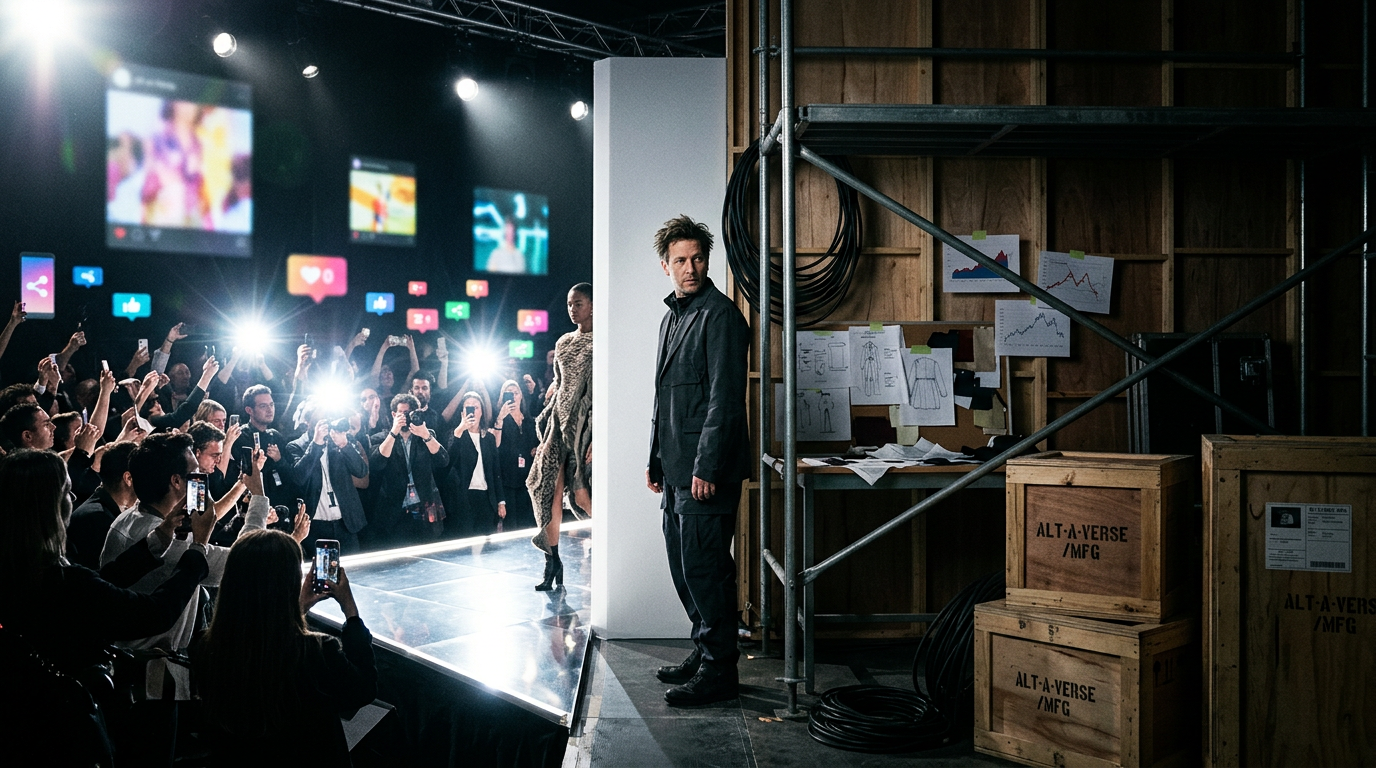
Why the internet celebrates creative success long after the systems sustaining it have already begun to crack
One of the most persistent misconceptions within the modern creative economy is the belief that visibility is a reliable indicator of business stability.
In an era dominated by social media platforms, digital campaigns, and viral moments, creative brands often appear to be thriving long after the internal systems sustaining them have begun to experience strain. A successful fashion show, a widely shared product launch, or a viral campaign can create the impression that a brand is operating from a position of strength.
Yet visibility and structural stability are not the same. Behind many culturally influential brands lies a far more complicated operational reality; one shaped by manufacturing constraints, capital limitations, logistical challenges, and the personal strain carried by founders.
The internet, however, rarely sees these dimensions of the business. Instead, it sees the highlight reel.
The Architecture of Visibility
Digital platforms reward spectacle.
A runway presentation, a celebrity endorsement, or a visually striking campaign can circulate globally within minutes. These moments shape public perception, reinforcing the narrative that creative brands are continuously expanding and succeeding. Yet the infrastructure required to sustain a brand exists largely outside this visible layer.
Manufacturing timelines remain invisible.
Cash flow cycles remain invisible.
Operational setbacks remain invisible.
Founder exhaustion remains invisible.
The digital economy therefore produces a form of perceptual distortion: audiences evaluate brands based on moments of cultural visibility rather than the operational systems sustaining them. This distortion can persist for years and brands may continue to appear successful long after the internal pressures surrounding them have intensified.
Case Study
The cultural visibility of independent fashion brands
Several independent fashion labels have experienced periods of extraordinary cultural recognition before encountering operational challenges.
The rise of Hanifa, founded by Anifa Mvuemba, provides an instructive example. The brand gained global attention for its innovative digital runway presentation during the early months of the pandemic, when 3D garments appeared to move across invisible models.
The presentation was widely celebrated as a moment of creative ingenuity within the fashion industry yet the operational realities of running an independent fashion label: manufacturing coordination, inventory management, shipping logistics, and customer expectations continued to shape the day-to-day functioning of the company long after the viral moment had passed.
This contrast between cultural visibility and operational complexity illustrates a broader pattern within the creative economy. Public recognition can amplify a brand’s reputation, but it does not eliminate the structural pressures surrounding its operations.
Case Study
Beauty brands and the illusion of rapid success
The beauty industry offers similar examples of how visibility can obscure structural realities.
Brands such as Ami Colé, founded by Diarrha N'Diaye-Mbaye, received significant attention for their cultural positioning and product innovation. Retail partnerships, media coverage, and strong community engagement created the impression of a rapidly expanding brand yet behind the scenes, beauty companies must navigate the complex infrastructure of product formulation, regulatory compliance, manufacturing, distribution, and retail relationships. These operational systems require substantial capital and sustained logistical coordination.
When the brand later announced that it would close operations, many observers expressed surprise. The surprise itself illustrates the power of the visibility illusion. The brand appeared successful because the public primarily encountered its cultural presence rather than the operational challenges shaping its sustainability.
The Visibility Economy
The modern creative economy operates within a structure that increasingly prioritises attention as a form of currency.
Visibility attracts partnerships.
Visibility attracts investors.
Visibility attracts audiences.
Yet visibility alone does not build the systems required to sustain a business. This dynamic can place founders in a difficult position. Cultural success may generate expectations of continued expansion even when the underlying operational systems remain fragile.
In some cases, the pressure to maintain visibility can even intensify structural strain. Brands may continue investing in marketing campaigns or high-profile events in order to maintain relevance while simultaneously managing operational challenges behind the scenes. The result is a widening gap between perception and reality.
Structural Reality
The visibility illusion is not simply a consequence of social media culture. It also reflects deeper structural characteristics of the creative economy.
Large corporations operate with vertically integrated systems that allow them to absorb operational challenges without immediately disrupting public perception. Independent founders rarely possess the same buffers. When production delays occur, when cash flow tightens, or when logistical complications arise, the effects are felt directly within the founder’s organisation. At the same time, digital audiences continue to evaluate the brand through the lens of visibility. This imbalance reveals a critical tension within the contemporary creator economy.
Creative brands operate in an environment where cultural recognition can expand rapidly, but the infrastructure required to support that recognition develops much more slowly.
Investigative Conclusion
Across the previous investigations within this series, several recurring patterns have emerged.
Creative founders often operate without access to the capital structures required to stabilise their businesses.
Manufacturing systems can impose operational constraints that are difficult for independent brands to navigate.
Digital platforms amplify both success and criticism, intensifying the pressures surrounding public perception.
Founders themselves frequently carry the emotional and operational burden of sustaining the entire enterprise. These dynamics do not occur in isolation. Together they form the structural environment within which many creative brands attempt to grow. Understanding this environment requires moving beyond the mythologies of entrepreneurship that dominate cultural discourse.
The issue is rarely the absence of talent, creativity, or audience interest. More often, the challenge lies in the systems surrounding the work.
The Questions Ahead
If the modern creative economy continues to produce culturally influential brands that struggle to sustain themselves operationally, the question that follows is unavoidable.
What would the creative economy look like if its systems were designed intentionally to support the people producing its cultural value?
What forms of infrastructure would allow independent creators to grow without carrying the full burden of operational complexity alone? and how might new financial, manufacturing, and distribution models reshape the relationship between creativity and commerce?
These questions move the investigation into its next phase because identifying the fractures within an economic system is only the beginning. The more difficult task and perhaps the more important one is imagining how those systems might be rebuilt.
The next phase of The Creative Collapse Series moves beyond investigation into design.
Inside the Vault, the series continues with a new set of essays examining how the creative economy might be re-engineered from capital structures and supply chains to founder sustainability and creative ownership because if the systems surrounding creators were built for a different era, the future of the creative economy may depend on designing new ones.