Episode 8: The Beauty Brand Pattern
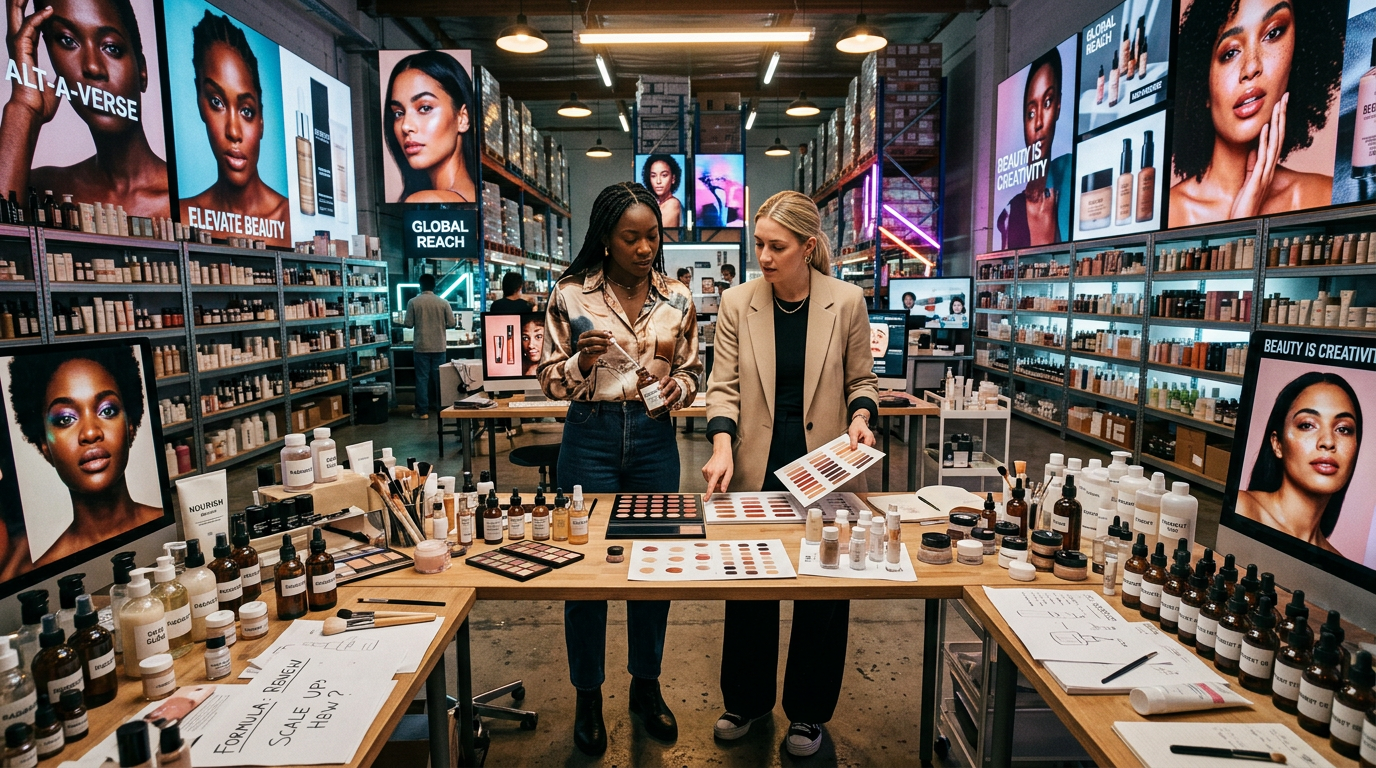
Why culturally influential beauty brands often struggle to sustain long-term commercial stability
Over the past decade, the beauty industry has become one of the most visible arenas within the modern creative economy. Social media platforms have transformed cosmetics and skincare into cultural phenomena, enabling brands to reach global audiences with unprecedented speed. Influencers, makeup artists, and entrepreneurs have launched companies that quickly gained devoted communities, retail partnerships, and international recognition.
At first glance, the rise of these brands appears to confirm the promise of the contemporary creator economy: talented founders can build influential companies by connecting directly with audiences who share their aesthetic vision. Yet behind the visibility of many beauty brands lies a more complicated economic reality. The infrastructure required to sustain a cosmetics company from research and formulation to manufacturing, regulatory compliance, distribution, and marketing is far more complex than the public narrative of creative entrepreneurship often suggests.
As a result, the beauty sector has become a revealing case study in the broader dynamics explored throughout this investigation. Several brands that achieved rapid cultural recognition have encountered the same structural pressures affecting creative founders across fashion, media, and other industries.
These cases illustrate a recurring pattern: visibility and cultural influence do not always translate into sustainable financial infrastructure.
Structural Pressure
Unlike digital products, cosmetics and skincare require extensive physical production systems. Formulation development, safety testing, packaging design, regulatory approvals, and manufacturing all represent significant upfront investments.
Even before a single product reaches customers, founders must commit substantial capital to production and compliance processes. Once products enter the market, brands must maintain continuous inventory levels while navigating distribution relationships with retailers and online platforms. These operational demands create a financial structure in which revenue cycles and production cycles are tightly interconnected. Retail partnerships may require brands to supply large quantities of inventory, while marketing expectations particularly within social media environments often require ongoing investment to maintain visibility.
For emerging brands, this structure can create a precarious balance between cultural growth and operational sustainability.
Case Study
Ami Colé and the challenge of scaling with cultural purpose
Founded by Diarrha N'Diaye-Mbaye, Ami Colé entered the beauty market with a clear mission: to create cosmetics specifically designed for melanin-rich skin tones while celebrating cultural authenticity.
The brand quickly gained attention for its thoughtful formulations and inclusive messaging. It secured retail partnerships with major beauty retailers and received significant media recognition for its cultural relevance and product quality.
Despite this momentum, the company eventually announced that it would close operations. While the specific financial circumstances of the closure were not fully disclosed publicly, the situation highlighted a broader reality within the beauty industry: achieving cultural resonance does not automatically resolve the operational challenges associated with sustaining a consumer product company.
Brands like Ami Colé often operate at the intersection of cultural influence and economic constraint. Their founders must simultaneously maintain product development, retail relationships, marketing visibility, and inventory management all while operating within competitive markets dominated by multinational corporations with far greater resources. The story of Ami Colé illustrates how a brand can achieve meaningful cultural impact while still encountering structural limitations within the industry’s economic architecture.
Case Study
Pat McGrath and the capitalisation of creative authority
The trajectory of Pat McGrath Labs offers a contrasting example that reveals how capital access can reshape the sustainability of creative brands.
Pat McGrath entered the beauty industry with extraordinary creative credibility. Widely regarded as one of the most influential makeup artists in fashion, she had already shaped global beauty aesthetics through decades of editorial and runway work before launching her own brand.
When Pat McGrath Labs debuted in 2015, its products quickly sold out, driven by McGrath’s reputation and a highly engaged consumer base. However, the brand’s ability to scale effectively was significantly strengthened by strategic investment where in 2018 the company secured major funding from investment firm Eurazeo Brands, reportedly valuing the business at over one billion dollars. This capital infusion enabled the company to expand production, strengthen distribution networks, and support global marketing efforts.
The example demonstrates how institutional investment can provide the infrastructure necessary to transform creative credibility into sustained commercial growth. Without such financial backing, even highly respected creators may struggle to maintain the operational scale required for long-term success.
Case Study
Beautystat and the operational complexity of product innovation
Another revealing example appears in the story of Ron Robinson.
Robinson spent years working as a cosmetic chemist developing products for major beauty corporations before launching his own brand, Beautystat. His scientific expertise enabled him to create formulations with significant consumer interest, including stable vitamin C serums that quickly gained popularity among skincare enthusiasts.
Despite strong product credibility, building an independent brand around these innovations required navigating the full spectrum of operational responsibilities associated with the beauty industry: manufacturing partnerships, regulatory compliance, retail negotiations, and marketing strategy.
Robinson’s experience highlights another dimension of the beauty brand pattern: technical expertise alone does not eliminate the structural complexity of operating within the cosmetics industry.
Even founders with deep product knowledge must navigate financial, logistical, and distribution challenges that shape the long-term viability of their companies.
Cross-Industry Pattern
The experiences of these beauty founders echo patterns visible throughout the broader creative economy.
Cultural recognition can accelerate brand visibility, but it does not automatically provide access to the infrastructure necessary for sustained growth. Founders must still secure capital, build reliable supply chains, maintain distribution partnerships, and manage the operational complexity of scaling a consumer product company.
When these elements align, brands may achieve long-term stability. When they do not, even culturally influential companies may struggle to survive.
This dynamic explains why the creative economy often produces waves of highly visible brands that later encounter operational or financial difficulties. The issue is rarely the absence of creativity or audience interest; it is more often the absence of systems capable of supporting growth.
Systemic Implication
The beauty industry therefore offers a microcosm of the broader structural challenges facing creative founders.
The market rewards innovation, aesthetic vision, and cultural authenticity, yet the infrastructure required to sustain these qualities remains unevenly distributed. Large corporations benefit from vertically integrated supply chains, established distribution channels, and extensive marketing budgets.
Independent founders must assemble these systems incrementally while continuing to develop products and maintain brand identity. Understanding this imbalance is essential for interpreting the rise and fall of beauty brands within the contemporary creator economy. What appears from the outside as a simple business failure often reflects deeper structural pressures embedded within the industry itself.
Forward Inquiry
The repeated emergence of these patterns raises an important question for the future of creative entrepreneurship. If culturally influential brands continue to struggle under the weight of operational complexity, what forms of infrastructure might enable founders to sustain their work over longer periods of time?
Could new financing models, shared production networks, or collaborative distribution systems reduce the structural disadvantages facing independent brands?
These questions move the investigation toward its final stage: examining how the creative economy might be redesigned to support the creators who generate its cultural value.
The next and concluding episode therefore shifts the focus from diagnosis to design because if the systems surrounding creative founders are producing recurring patterns of instability, the task ahead is not simply to observe those patterns but to imagine how they might be rebuilt.
Part of The Creative Collapse Series; an ongoing investigation into the structural pressures shaping the modern creative economy.